
Contributor News
Liberation Day Unveiled: Trump’s Bold Plan to Shift Taxes to Foreign Nations

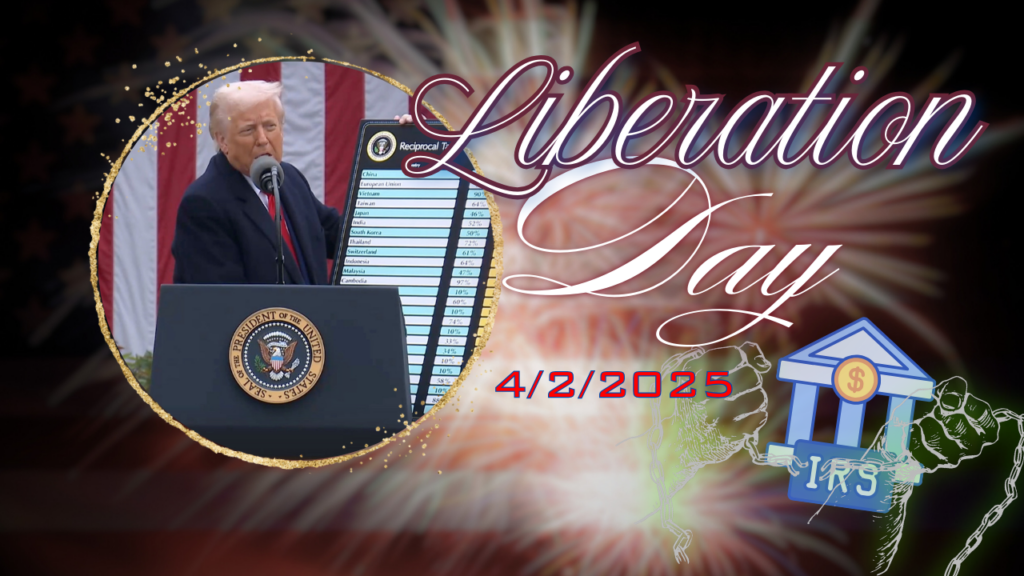
President Donald Trump delivered a historic speech on the White House lawn this afternoon, declaring April 2, 2025, as “Liberation Day” and unveiling his ambitious plans for the External Revenue Service (ERS), a new federal agency designed to collect tariffs and shift the nation’s revenue generation away from domestic taxes. The ERS, a cornerstone of Trump’s second-term economic agenda, aims to harness significant tariff revenues from foreign countries, replace the Internal Revenue Service (IRS), and reduce the tax burden on American citizens. Trump’s vision, marked by the launch of new tariffs, reflects his commitment to reshaping the U.S. economy through trade policy.
Trump’s Vision: A Tariff-Driven Economy
Trump first announced the ERS on January 20, 2025, outlining a plan to collect tariffs and other revenues from foreign nations. The agency is a key component of his broader economic strategy, prioritizing high tariffs to generate substantial income for the U.S. government. By focusing on external revenue sources, Trump envisions a future where American citizens pay lower taxes, with the ERS managing the influx of funds from international trade.
- Tariff Structure: The ERS will collect tariffs set at 25% on all goods from Canada and Mexico and 60% on goods from China, as announced in January 2025. These tariffs will target major trading partners to bring significant revenue while protecting American industries.
- “Liberation Day” Tariffs: On April 2, 2025, Trump expanded this approach with a new wave of tariffs, announced during his White House lawn speech. These duties include a 34% tax on imports from China and a 20% tax on the European Union, among others, and stack on top of existing tariffs on cars, metals, and Chinese goods. The ERS is positioned to manage the collection of these new tariffs, which Trump sees as a cornerstone of his economic policy.
Liberation Day Speech: ERS Plans and Announcements
In a ceremony broadcast live, Trump stood in the White House Rose Garden, holding a signed executive order on tariffs, and declared April 2, 2025, as “Liberation Day.” He laid out his vision for the ERS, emphasizing its role in transforming the U.S. economy. “Today is Liberation Day for America,” Trump proclaimed, “a day where we take back our economic power and make foreign nations pay to support our great country.” He detailed the ERS’s purpose, stating it will collect the new tariffs—34% on China, 20% on the EU, and others—bringing in “hundreds of billions of dollars annually” to fund government operations and reduce taxes on Americans.
Trump highlighted the ERS as a “game-changer” designed to shift the burden of revenue generation to foreign entities. He reiterated his long-term goal of replacing the IRS: “We’re going to take in so much money from the outside that we won’t need the IRS anymore. We’ll keep taxes low for our citizens and let the outsiders pay.” The speech underscored Trump’s commitment to a tariff-driven economic model, with the ERS at the forefront of this transformation.
Replacing the IRS: A Long-Term Goal
A central pillar of Trump’s vision is the eventual replacement of the IRS with the ERS. By generating revenue through tariffs, Trump aims to reduce the reliance on domestic income taxes, ultimately paving the way for the IRS’s abolition. The ERS would take over as the primary revenue-generating agency, focusing on external sources rather than taxing American citizens and businesses.
- Shifting the Burden: Trump’s plan is to “let all the outsiders pay,” as articulated during his speech. The ERS will collect tariff revenues, allowing the government to lower taxes on Americans and fund operations through foreign payments.
- A New Economic Model: This vision reflects Trump’s belief in a tariff-driven economy, where the U.S. leverages its trade relationships to create a more prosperous future for its citizens, free from the burden of heavy domestic taxation.
The Role of DOGE in Trump’s Vision
The ERS aligns with the broader mission of the Department of Government Efficiency (DOGE), led by billionaire Elon Musk and entrepreneur Vivek Ramaswamy. DOGE is focused on reducing the size and scope of the federal government, and the ERS is a key part of this initiative. By shifting revenue collection to external sources, Trump envisions a leaner government that prioritizes American interests and minimizes domestic tax obligations.
A New Era for American Trade and Revenue
With the ERS and the “Liberation Day” tariffs now launched, Trump is setting the stage for a new American trade and revenue policy era. The ERS represents a fundamental shift in how the U.S. generates income, focusing on external tariffs to fund government operations and reduce the tax burden on Americans. As Trump continues to push this vision forward, the ERS stands as a symbol of his commitment to economic transformation, with the long-term goal of replacing the IRS and redefining the nation’s fiscal future.
Full speech: