
Contributor News
Justice Delayed, Trust Destroyed: The Murder of Henry Nowak

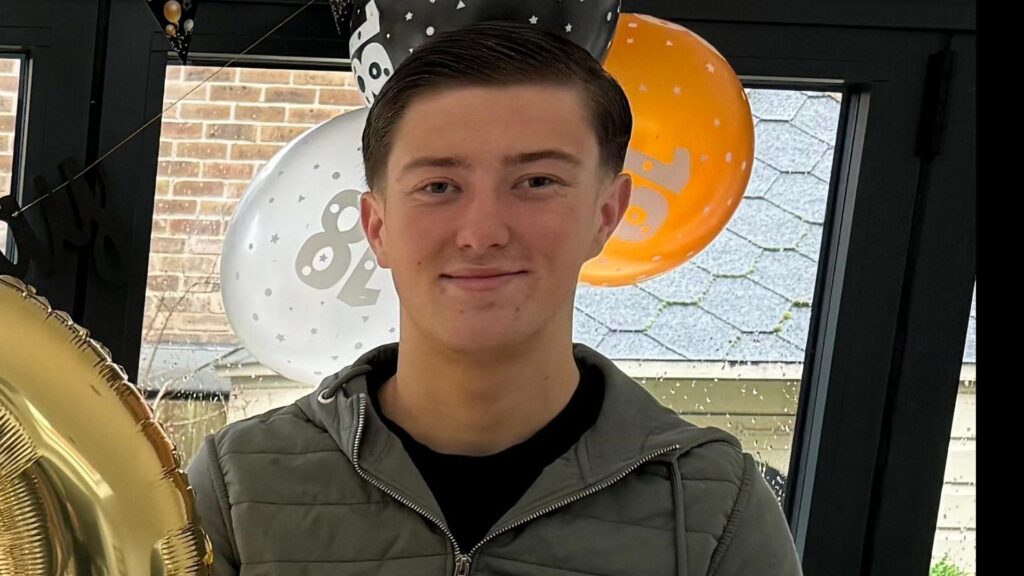
On the night of 3 December 2025, Henry Nowak, an 18-year-old finance student from Chafford Hundred in Essex, headed home through Southampton’s Belmont Road after a night out with his university football teammates. He was barely months into his first year at the University of Southampton, described by those who knew him as warm, funny, ambitious, and the kind of person whose arrival at training felt, in the words of a teammate, like “they’d just scored a goal.” He never made it home.
The Murder
Vickrum Digwa, then 22 years old, stabbed Nowak five times with a 21-centimetre Sikh ceremonial blade, a kirpan, including a fatal wound to the chest. Digwa later told police that Nowak had racially abused him, knocked his turban off, and that he had acted purely in self-defense. It was revealed at trial that after initially stabbing Nowak, Digwa continued to pursue him as Nowak attempted to flee, even trying to climb over a fence to escape. The prosecution described this as a sustained, deliberate attack on an unarmed and defenseless young man.

What happened next compounded the tragedy in a way that would eventually bring people to the streets.
The Police Response
When officers from Hampshire Police arrived at the scene, they encountered two men: Digwa, who was articulate and composed, and Nowak, who was visibly distressed and struggling. Body-worn camera footage, released following the conclusion of the trial, captures Nowak repeatedly telling officers he had been stabbed and was struggling to breathe. One officer responded: “Don’t think you have, mate,” before Nowak was placed in handcuffs.
The footage shows officers initially detaining Nowak on suspicion of assault, while Digwa was treated as the victim. Digwa’s account, that he had been racially attacked, was believed. Nowak’s pleas were not. That led officers to arrest Nowak and place him in handcuffs moments before he collapsed and became unconscious. He died despite their best efforts to give him first aid.
Nowak died alone on a pavement in handcuffs, the victim of a murder and, in the eyes of many, of a catastrophic and devastating failure of policing. The prosecution at sentencing put it starkly: “Henry Nowak dying alone, humiliated and handcuffed was a direct consequence of Vickrum Digwa’s dishonesty.”
The Trial
The jury convicted Digwa of murder on 28 May 2026. Digwa’s mother, Kiran Kaur, 53, was found guilty of assisting an offender, she and Digwa’s father had arrived at the scene and taken the knife back to the family home.
The judge rejected Digwa’s accusations that Nowak had physically or racially abused him. Throughout the proceedings, Digwa had maintained his self-defence narrative, claiming Nowak had threatened him, grabbed him by the hair, and said “I’m going to kill you.” The prosecution dismantled each element of this account, describing Digwa as a man with a weapons obsession who “chose to use a weapon on the streets of Southampton.” The court noted that Digwa is skilled with weapons, trained with weapons, sleeps in a room with weapons, and searches for weapons on his phone.
Digwa was convicted of murdering 18-year-old Nowak following the trial and sentenced to life imprisonment with a minimum term of 29 years. The sentencing judge described Henry as “a much-loved, kind, hard-working and ambitious young man, devoted to his family and with a bright future”, the first in his family to go to university, and told Digwa that he had “robbed him of all those he loved, all the things he cared about and liked to do.”
Henry’s father, Mark Nowak, delivered a victim impact statement in which he said the family had effectively been handed “a life sentence” of their own.
The Bodycam Footage
The release of the bodycam footage, timed to coincide with sentencing, proved as explosive as many had feared. The footage intensified scrutiny of the police response, which remains under investigation by the Independent Office for Police Conduct (IOPC).
Nowak’s family welcomed the murder conviction but made clear that justice for Henry could not end there. His father spoke outside court and directly called out the actions of the first responding officers. The footage, viewed millions of times within hours of its release, showed a dying teenager being disbelieved and restrained while his killer stood nearby as the apparent victim of the night’s events.
Police and Crime Commissioner Donna Jones described the case as a “national tragedy” and said there were “serious concerns about police impartiality, fairness and judgement” that must be addressed.
The Unrest
The release of the footage and the sentencing on 1 June 2026 ignited immediate public anger. By the evening of 2 June, that anger had spilled into the streets.
Over a thousand protesters gathered outside Southampton Central Police Station to demand action, with crowds assembling around 6pm for a minute’s silence for the teenager, shouts of “shame on you” ringing out across the city. What began as a solemn vigil rapidly deteriorated. Police holding riot shields clashed with protesters in the Portswood area, close to where Nowak was killed. Officers were pelted with stones on a residential street in the St Denys area before charging with perspex shields. Protesters set commercial bins on fire and rolled them towards officers.
Police confirmed at least one arrest during the violent clashes, with pepper spray deployed after officers were struck by thrown objects. Tommy Robinson was also reported to have attended the protests.
The government moved quickly to condemn the disorder. Home Secretary Shabana Mahmood said: “The Nowak family made a powerful call to us all yesterday to not let Henry’s death be used to create further division, hatred or tension. There can be no justification for hijacking this tragedy to stir up violence and disorder.”
The tension between legitimate grief and political exploitation sits at the heart of what is unfolding in Southampton. Henry Nowak’s family have been unambiguous: they want accountability, not violence. They want the IOPC investigation to deliver answers on why their son was handcuffed as he lay dying, and why the man who killed him was initially treated as the victim. Those are questions that policing in England will have to answer, whatever happens on the streets.
This article is based on reporting as of 2 June 2026. The IOPC investigation into the police response remains ongoing.