
Contributor News
“Welcome to the War Department”: Hegseth Declares End of ‘Woke’ Era in Military

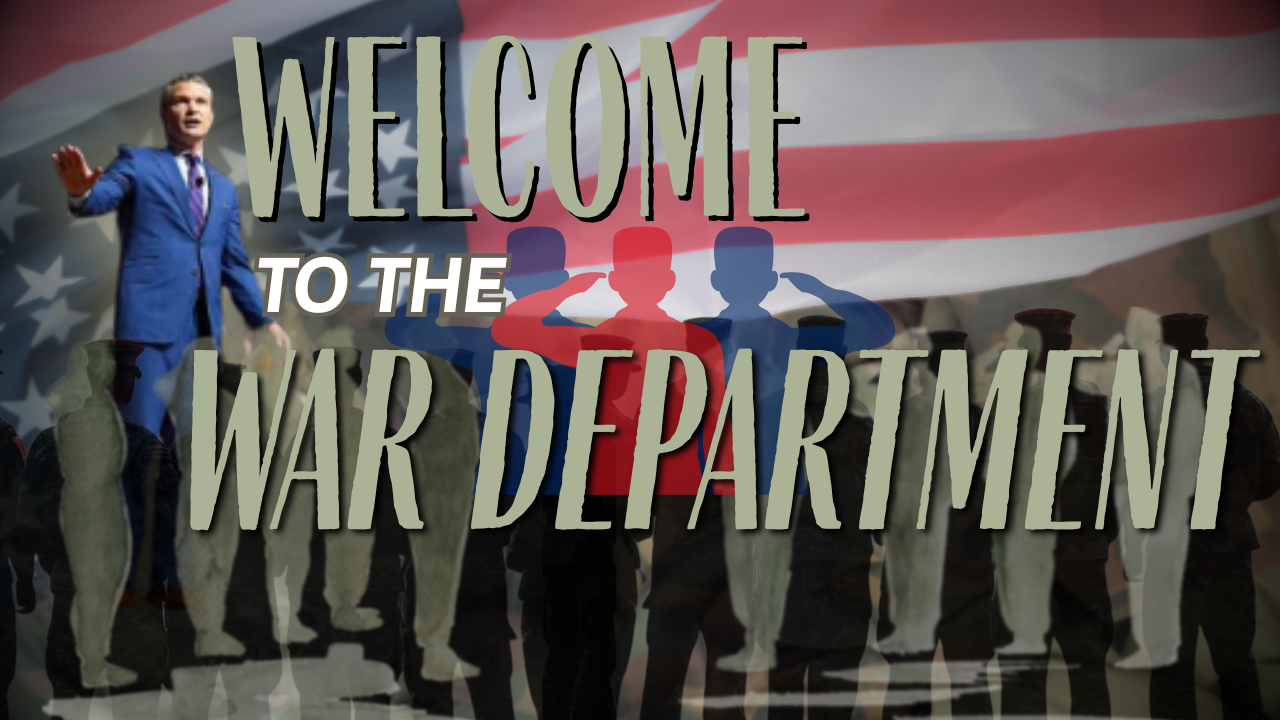
In a dramatic, tightly controlled gathering at Marine Corps Base Quantico today, U.S. Secretary of War Pete Hegseth summoned hundreds of top military leaders. Remarks from President Donald J. Trump followed the sweeping performance of policy and ideological realignment.
The purpose: to signal a decisive shift away from perceived “woke” policies, reestablish a warrior ethos, enforce uniform standards, and reorient the U.S. into what Hegseth called the “War Department.”
Hegseth’s Charge: Return to Lethality, Zero Tolerance for Softness
Hegseth opened with a serious tone:
“Good morning, and welcome to the War Department, because the era of the Department of Defense is over.”
He referred to past decades as lost to misdirected political agendas:
- “Political leaders set the wrong heading, and we lost our way. We became the Woke Department — but not anymore.”
- He declared that the military had too often advanced leaders based on quotas, diversity goals, or historic firsts rather than merit.
- He called out what he called the “insane fallacy” that “our diversity is our strength.”
From there, he launched a series of reforms, unveiling 10 new directives that cover multiple facets of military life — from fitness, grooming, and physical standards to redefinitions of harassment, bullying, and toxic leadership.
Fitness & Physical Standards
- All service members (including the top ranks) must pass two physical tests annually; combat occupations must meet gender-neutral male standards.
- He expressed “fat troops” and even “fat generals and admirals” as unacceptable.
- He asserted that if someone cannot meet the standards, “it’s time for a new position or a new profession.”
Grooming & Appearance
- Hegseth announced a rollback of beard allowances. Those with facial hair medical exemptions must remedy the condition within a year. Army+1
- “The era of unprofessional appearance is over,” he said, declaring stricter grooming and uniform protocols.
Leadership & Culture Reform
- He plans to revisit definitions of “toxic leadership,” bullying, and hazing, with the aim of liberating commanders from what he described as “walking on eggshells” over complaints.
- He urged that leadership be merit-based, apolitical, risk-taking, and faithful to their oaths.
- In a pointed stroke, he told dissenters: if these new directives make your “heart sink,” resign.
In defending recent flag officer dismissals, he argued that changing culture demands new leadership rather than preserving those who prospered under the old.
Full speech:
.@SecWar Pete Hegseth FULL REMARKS at the WAR DEPARTMENT ADDRESS: pic.twitter.com/dbvmQg3FT6
— Department of War 🇺🇸 (@DeptofWar) September 30, 2025
Trump Amplifies the Message—and Takes It Domestic
After Hegseth’s remarks, President Trump took the stage, echoing and expanding on the themes. He affirmed his backing for a revamped, unapologetically combative military identity.
Trump also inserted a domestic dimension:
- He pointed out cities like San Francisco, Chicago, and New York as failing and unsafe, calling for them to serve as “training grounds” for military forces tasked with internal instability.
- He warned of a looming “war from within,” situating internal threats as being of equal significance to foreign enemies.
Observers noted that the military audience remained largely silent, consistent with norms that restrict overt partisanship in uniform.
President Trump’s full remarks:
President Trump Delivers Remarks to the Department of War https://t.co/VZvSpa57h9
— The White House (@WhiteHouse) September 30, 2025
Context, Reactions & Implications
- The summit’s unusual nature — hundreds of generals and admirals ordered to assemble on short notice — drew immediate attention and speculation.
- The name shift, from “Department of Defense” to “War Department,” remains symbolic unless Congress formalizes it.
- Some critics warn of politicizing the military, pressuring officers to conform or resign. The bold directives on fitness, gender neutrality, and grooming standards are likely to prompt legal and cultural pushback.
- Others argue the changes may restore discipline and lethality compromised by decades of reforms and shifting military culture.
What unfolded today at Quantico is not merely a speech or policy rollout — it signals an attempt to reengineer the identity and decision architecture of the American military. Whether that project succeeds or fractures depends on how officers respond, legal constraints, and whether political winds permit such an overhaul.