
Contributor News
Tulsi Gabbard Exposes 2016 Intel Playbook: “Team Sport” Russia Narrative Lied to the Public

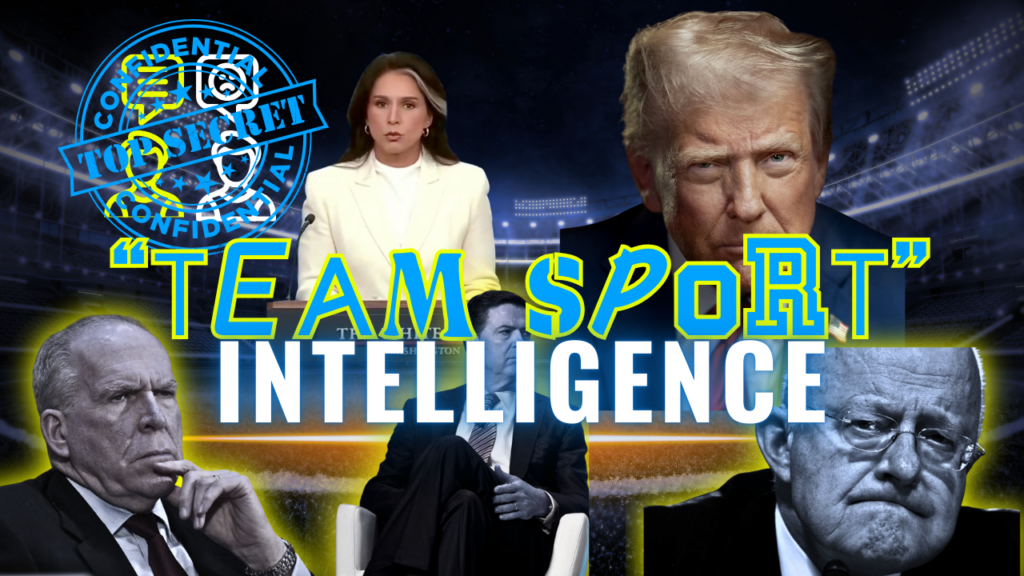
“Team Sport” Intelligence: How Clapper’s Playbook Bent the Russia Narrative
Today, current Director of National Intelligence Tulsi Gabbard released newly declassified — though still partially redacted — emails that shed fresh light on how the intelligence community handled the 2016 “Russia interference” assessment.
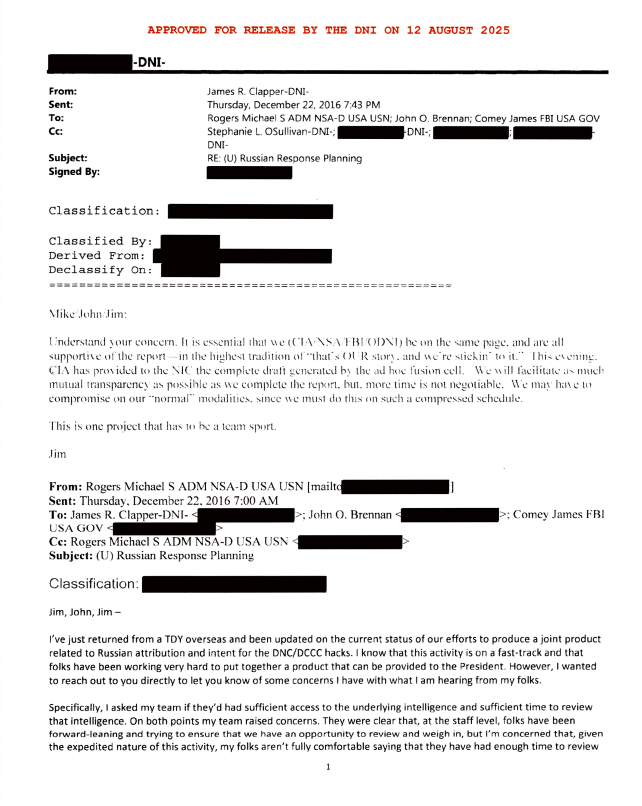
Among the releases are December 22, 2016, messages between then–DNI James Clapper and top intelligence officials that reveal more than just bureaucratic coordination. In one, Clapper presses agency heads to present a united front on the conclusion that Russia interfered in the 2016 election — despite internal doubts — declaring:
“It is essential that we… be on the same page… This is one project that has to be a team sport.”
In context, the phrase sounds less like a call for interagency unity and more like a locker-room pep talk before throwing the game.
Rogers Calls a Foul
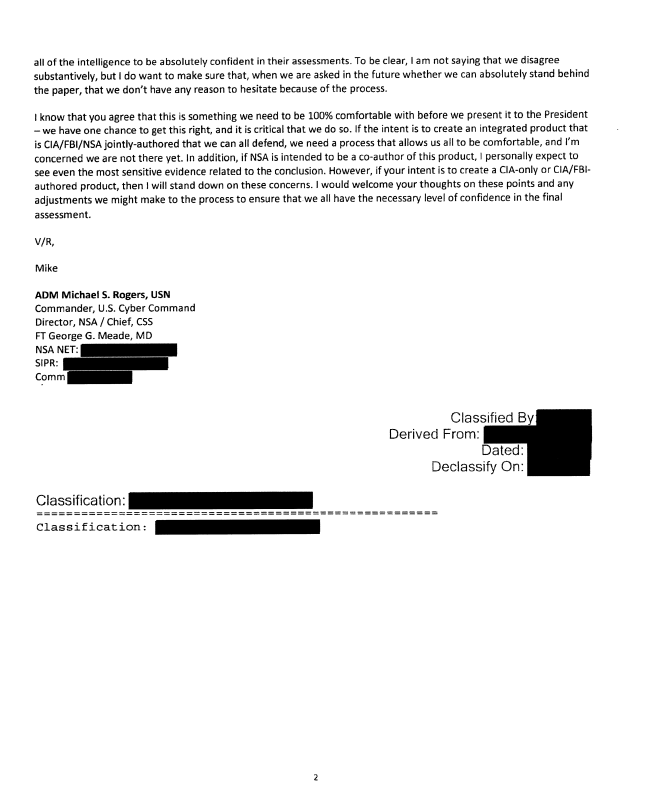
That same day, NSA Director Admiral Mike Rogers had sent a very different kind of message. Concerned about the rush to finalize the Intelligence Community Assessment (ICA) — the report that would formally declare Russian interference — Rogers warned that the NSA had not thoroughly reviewed the underlying evidence:
“I want to make sure that, when we are asked in the future whether we can absolutely stand behind the paper, we don’t have any reason to hesitate… I’m concerned we are not there yet.”
Rogers insisted that if the report was to carry the NSA’s seal, his team needed to see “even the most sensitive evidence” first. Clapper’s reply made it clear: time was up, and unity mattered more than certainty.
The Play Was Called Months Earlier
The December exchange was not the beginning — it was the final sprint in a months-long effort to align the intelligence community behind a single storyline.
Declassified emails from September 2016 show FBI and DHS officials asking that draft language on Russia’s “intent” be softened, because there was no definitive evidence Moscow planned to disrupt or alter U.S. election results.
Multiple classified assessments in the summer and fall of 2016 — including drafts of the President’s Daily Brief — concluded:
- No indication of Russian hacking to change votes
- Widespread manipulation of results was likely beyond any adversary’s capability
- The most probable threat was low-level, detectable cyber activity aimed at undermining public confidence
Even in December 2016, a PDB prepared for President Obama flatly stated:
“We assess that foreign adversaries did not use cyber attacks on election infrastructure to alter the U.S. Presidential election outcome this year.”
From “Unlikely” to “United”
Yet when the final ICA was rolled out in January 2017, the tone had shifted. Gone was the careful “low-to-moderate confidence” language. In its place was a sweeping, unified declaration that Russia had meddled to help Donald Trump — with the media treating it as a unanimous, unassailable judgment of the entire intelligence community.
The dissenting voices, like Rogers’, were muted. The conflicting assessments were buried. And the phrase “team sport” had become more than a metaphor — it was the modus operandi.
The Real Audience
If this was a team sport — and the allegations had proved to be true, the American people clearly were not included in the huddle. Instead, we were the spectators, watching a wickedly choreographed game whose outcome had already been decided. A narrative parroted repeatedly by mainstream media. From the locker room to the press box, the objective wasn’t to follow the evidence wherever it led — it was to keep the narrative intact.
And they played it well.