Contributor News
Trump’s Tough Stand on Ukraine: A New Era in U.S. Foreign Policy
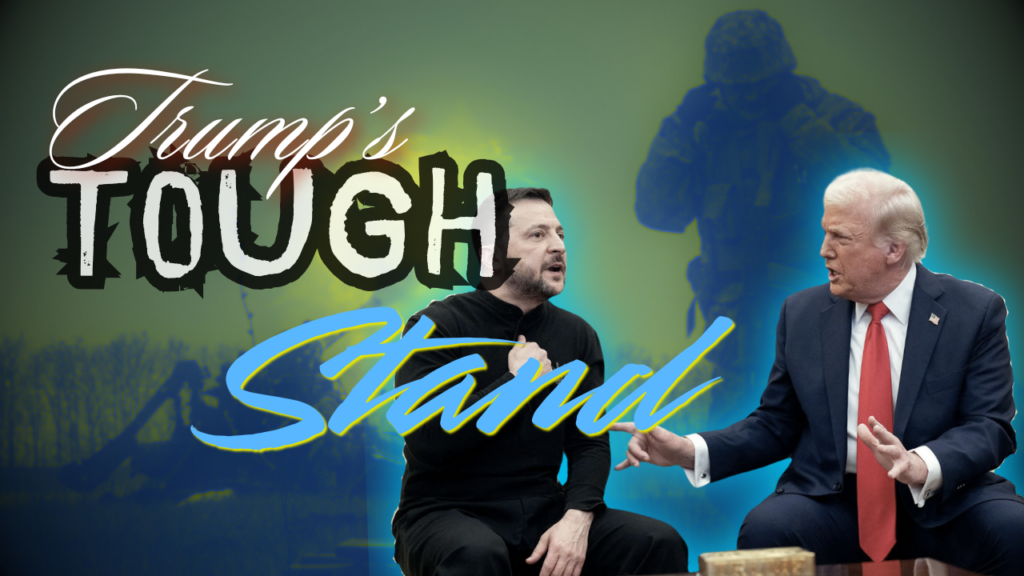

President Donald Trump is delivering on his promise to put America first by pausing military aid to Ukraine after a tense Oval Office showdown with Ukrainian President Volodymyr Zelensky on February 28. The move underscores Trump’s commitment to ending unchecked foreign aid, a stance widely supported by Americans who have watched over $350 billion of taxpayer funds flow into Ukraine since Russia’s 2022 invasion. With U.S. support now frozen, Trump is sending a clear message: no more blank checks for a nation that has yet to demonstrate concrete benefits for American interests.
The Oval Office Showdown
The high-stakes meeting between Trump and Zelensky was expected to finalize a deal granting the U.S. access to Ukraine’s rare-earth minerals, a potential boon for American industry. However, the discussion quickly unraveled when Zelensky hesitated to commit. Trump, who has consistently criticized endless foreign aid, accused him of playing geopolitical games, warning that his refusal to cooperate could push the conflict closer to World War III. Vice President JD Vance also pressed Zelensky, demanding he acknowledge America’s substantial support. When Zelensky instead questioned Trump’s approach to Russia and pushed for further security guarantees, Trump abruptly ended the meeting, canceling a planned press conference.
Adding intrigue to the clash, Zelensky met with a bipartisan Senate group—including prominent Democrats Chris Murphy and Amy Klobuchar—just hours before his sit-down with Trump. Reports suggest that during this breakfast meeting, Senate Democrats encouraged him to hold firm against Trump’s proposals, fueling speculation that this emboldened his defiant stance. Sources close to the situation claim Zelensky’s refusal to engage in serious negotiations blindsided Trump’s team, who had expected a smoother agreement after months of discussions. Many Americans took to X (formerly Twitter) to voice their frustrations, with one user stating, “He met with Dems who hate Trump, then walked in like he had the upper hand. Not a good move.”
Trump’s Firm Response: No More Free Passes
For Trump, whose administration is focused on fiscal responsibility and prioritizing domestic concerns, the heated exchange was a tipping point. The breaking point came when Zelensky made a comment that some perceived as a veiled warning: “First of all, during the war, everybody has problems, even you. But you have a nice ocean and don’t feel now, but you will feel it in the future.” Trump swiftly interjected, rejecting the idea that America’s security was at risk due to Ukraine’s war. “You don’t know that. Don’t tell us what we’re going to feel,” he shot back, emphasizing that the U.S. is in control of its own future.
Following the clash, Trump took decisive action. “This guy doesn’t want peace as long as America keeps footing the bill,” he posted on Truth Social. By Monday, he instructed Defense Secretary Pete Hegseth to freeze all undelivered military shipments to Ukraine, stating that aid would remain on hold until Zelensky demonstrated “good faith” in negotiations. The decision was met with widespread approval among Trump’s supporters, many of whom have long opposed the U.S. acting as Ukraine’s primary financial backer. “Trump is doing exactly what he was elected to do—put America first,” one popular post on X read.
Europe Steps In—But It’s Not Enough
Facing a sudden halt in U.S. aid, Zelensky quickly pivoted to Europe, traveling to London on March 2 for an emergency summit with European leaders. While nations like the UK and France pledged continued support, their financial commitments pale in comparison to the billions previously provided by the U.S. France responded with symbolic gestures, such as lighting up the Eiffel Tower in Ukraine’s colors, while UK Prime Minister Keir Starmer vowed to build a “coalition of the willing.” Yet, these efforts do little to fill the gaping void left by the U.S. funding freeze.
Meanwhile, Zelensky’s messaging remains inconsistent. On March 4, he took to X to describe the Oval Office confrontation as “regrettable” and expressed a willingness to work with Trump on a ceasefire. However, within 24 hours, reports circulated suggesting he had once again rejected negotiations with Russia—fueling skepticism about his true intentions. Critics argue that Zelensky’s shifting positions indicate he is more focused on securing funding than pursuing a realistic resolution to the war.
A Shift in U.S. Foreign Policy
During his State of the Union address to Congress Tuesday evening, President Trump hammered his peace-through-strength vision—ending wars, not bankrolling them—and noted Ukrainian President Volodymyr Zelensky’s latest offer to negotiate again. Zelensky now faces a reckoning: align with Trump’s terms or roll the dice on Europe as U.S. cash dries up. After the Friday meeting fiasco, many Americans ask: $350 billion later, why should we continue funding Ukraine’s war when so many in our own country are facing financial hardships?