Contributor News
Trump Signs Flag EO & Crime Crackdown Orders: Media Focuses on the Wrong Story


On Monday, President Donald J. Trump signed four new executive orders aimed at tackling crime and restoring respect for American law and symbols. The most prominent of the three addresses flag desecration—an issue that has sparked some controversy.
The flag protection order does not directly criminalize burning the American flag, which the Supreme Court ruled in 1989 (Texas v. Johnson) is protected speech under the First Amendment. Instead, the order directs Attorney General Pam Bondi and the Department of Justice to prosecute flag desecration when it overlaps with existing, content-neutral crimes such as incitement to violence, disorderly conduct, property destruction, or violations of local burning laws.
The order also authorizes the Attorney General and Secretary of Homeland Security to deny or revoke visas and immigration benefits for non-citizens who desecrate the flag, where legally permissible. The White House described the American flag as “the most sacred and cherished symbol” of the nation, calling acts of burning or defacing it “uniquely offensive and provocative” and capable of inciting violence.
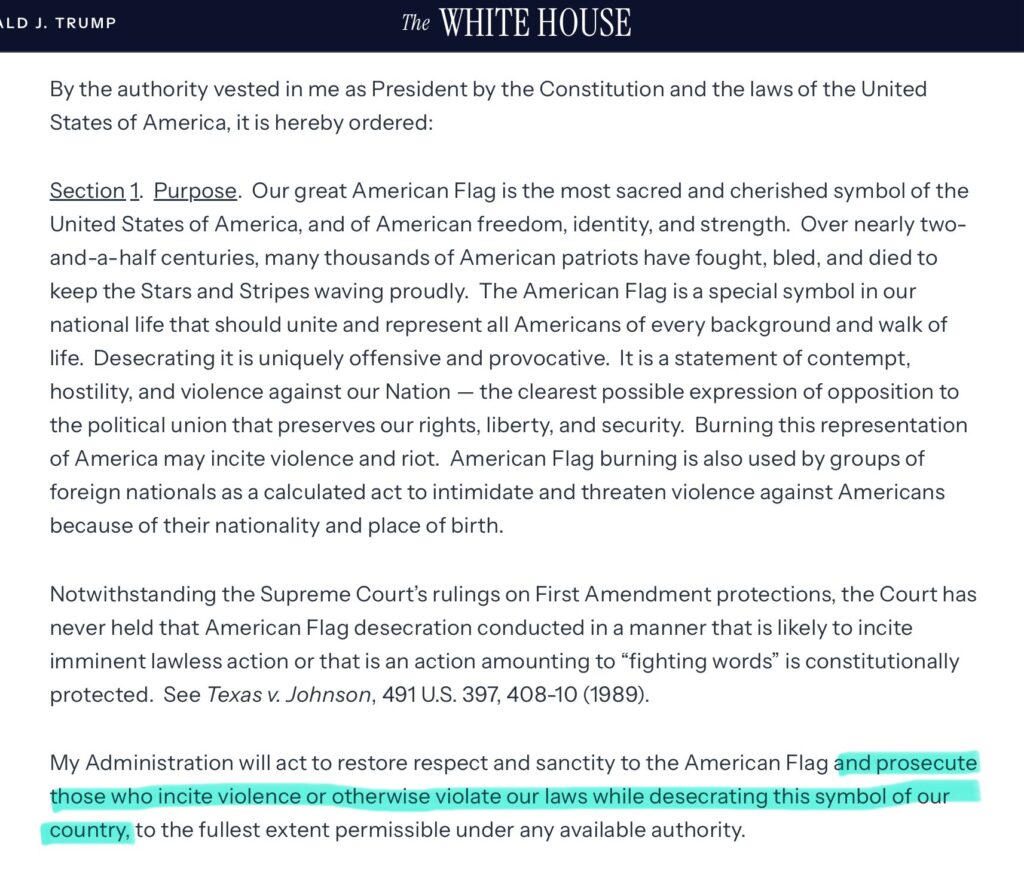

During the signing, President Trump reiterated his long-held belief that flag desecration should carry a penalty: “If you burn a flag, you get one year in jail.” While the executive order itself does not mandate jail terms, it directs federal prosecutors to use every available tool to hold offenders accountable. It also sets the stage for potential legal challenges aimed at revisiting the Supreme Court’s 1989 ruling.
Media Spin and Misrepresentation
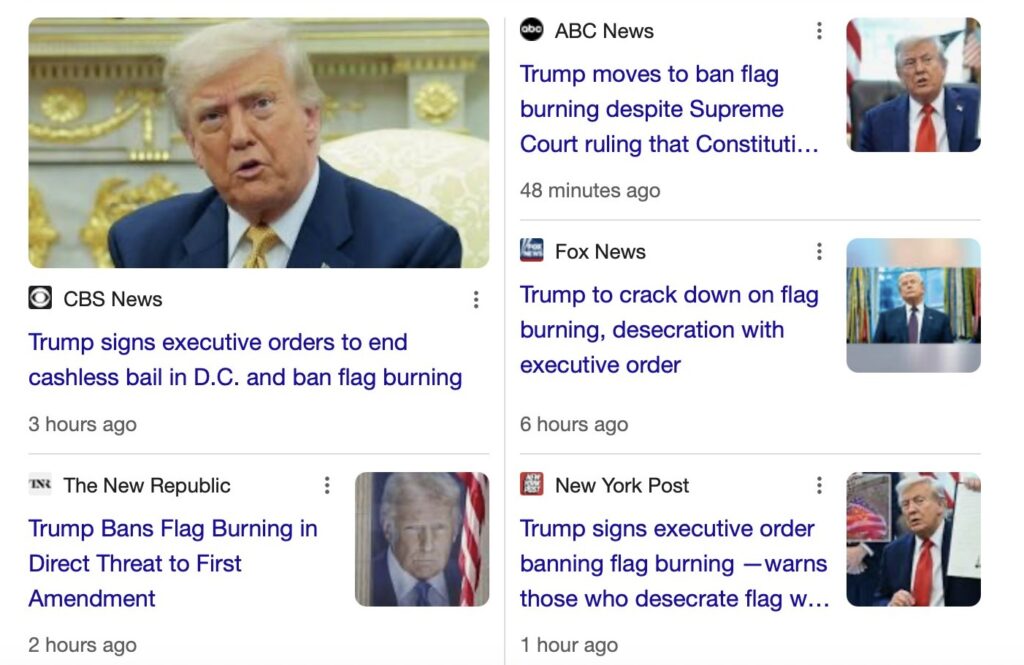
In the hours following the announcement, many mainstream outlets rushed to report that Trump had “banned flag burning” outright—framing the executive order as a direct attack on the First Amendment. Headlines from CBS, ABC, The New Republic, and others emphasized a supposed “ban” even though the order does not—and legally cannot—override Supreme Court precedent. Instead, the directive is narrowly focused on prosecuting flag desecration when it is tied to violence, property damage, or violations of existing law. By ignoring this distinction, the media has fueled misunderstanding about what the order actually does.

The move follows several high-profile protests over the past year, including anti-Israel demonstrations in Chicago and Washington, D.C., and anti-ICE protests in Los Angeles, where American flags were burned or desecrated.
In addition to the flag order, President Trump signed three additional executive actions targeting crime:
- Restoring Law and Order in D.C. – The first directs federal authorities to crack down on the escalating crime emergency in Washington, D.C., increasing resources for policing and prosecution.
- Ending Cashless Bail – The second order blocks the use of cashless bail in the District of Columbia, requiring judges to consider public safety and flight risk when determining bail. The White House argues that “catch-and-release” policies have fueled repeat offenses and undermined law enforcement.
- Ending Cashless Bail Nationwide – Expands the administration’s push to halt cashless bail across the United States, citing evidence that “catch-and-release” policies have fueled repeat offenses and undermined law enforcement.
Together, the three executive orders reflect Trump’s broader “law and order” agenda. Supporters argue the measures restore accountability, protect communities, and safeguard national symbols, while critics warn they could test constitutional limits.
Still, polling suggests Trump’s stance resonates with many Americans. In 2020, a YouGov survey found nearly half of Americans support criminalizing flag desecration, despite current First Amendment protections.