
Contributor News
Supreme Court Blocks Trump Tariffs—But Dissenting Justices Reveal Powerful Path Forward

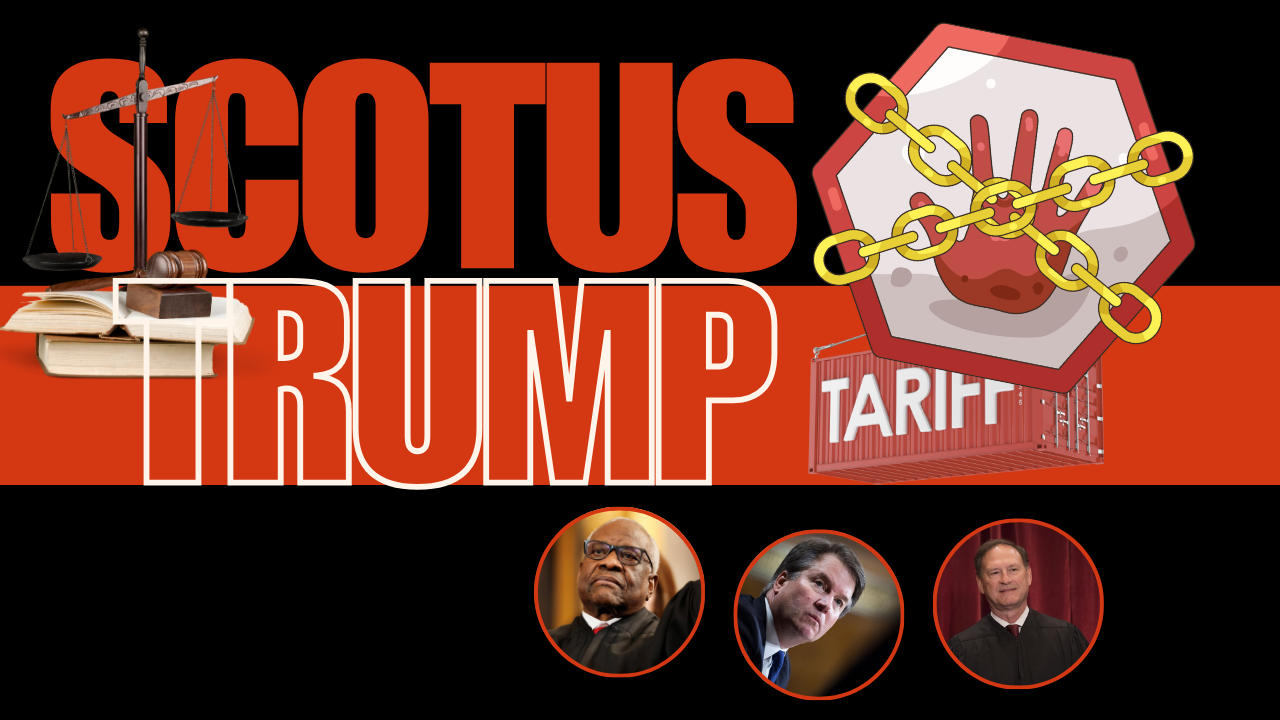
In a 6-3 ruling today, the U.S. Supreme Court struck down President Donald Trump’s use of the International Emergency Economic Powers Act (IEEPA) to impose broad tariffs on imports, declaring that the 1977 law does not grant the executive branch such sweeping authority.
The decision, authored by Chief Justice John Roberts and joined by a mix of liberal and some conservative justices, represents a significant check on presidential power in trade policy. However, powerful dissenting opinions from Justices Clarence Thomas, Brett Kavanaugh, and Samuel Alito not only defended the president’s actions but also outlined clear alternative paths forward, strategies that Trump swiftly embraced in a post-ruling press conference, vowing to press on with his America First agenda.
The case originated from Trump’s bold executive actions shortly after his inauguration in January 2025. Facing what he described as urgent threats to national security and the economy, the president declared two national emergencies under IEEPA: one targeting the influx of illegal drugs from Canada, Mexico, and China, and another addressing persistent trade deficits that he argued were crippling American manufacturing and supply chains.
These declarations enabled tariffs of 25% on most Canadian and Mexican imports, 10% on Chinese goods linked to drug trafficking, and at least 10% on imports from other nations. The measures generated an estimated $142–200 billion in revenue in 2025 alone and spurred trade negotiations with over 75 countries, including major deals with China, the UK, and Japan. Legal challenges quickly mounted from businesses and states, arguing that IEEPA’s language, to “regulate… importation,” did not extend to tariffs, which they claimed are a form of taxation constitutionally reserved for Congress under Article I, Section 8. Lower courts, including the U.S. District Court for the District of Columbia and the U.S. Court of International Trade, sided with the challengers, issuing injunctions and invalidating the tariffs as overly broad. The Federal Circuit affirmed these rulings, applying the major questions doctrine to require explicit congressional authorization for such economically significant actions.
The Supreme Court granted certiorari in September 2025, heard arguments in November, and delivered its opinion Friday, February 20th, 2026. The majority opinion emphasized that tariffs are a “core congressional function” and that IEEPA lacks the clear language needed to delegate this power, especially given the law’s historical use for sanctions rather than revenue-raising duties. Concurrences from Justices Neil Gorsuch, Amy Coney Barrett, Elena Kagan (joined by Sonia Sotomayor and Ketanji Brown Jackson), and Jackson further underscored statutory limits and rejected expansive executive interpretations. The Court vacated one lower court judgment for jurisdictional reasons and affirmed the other, leaving questions of refunds—potentially totaling $130–200 billion—and disruptions to existing trade deals to be resolved in lower courts. Yet, it was the dissents that captured the attention of conservative legal scholars and Trump supporters, offering a robust defense of executive authority rooted in constitutional originalism and historical precedent.
Justice Clarence Thomas, in a separate dissenting opinion, delivered a masterful analysis challenging the nondelegation doctrine’s application to foreign commerce powers. Thomas argued that the authority to impose duties on imports is not a “core legislative power” that Congress cannot delegate, but rather a “prerogative” or “executive” function inherent to external affairs and the law of nations. Drawing on Founding-era thinkers like William Blackstone, John Locke, Montesquieu, and Emer de Vattel, Thomas explained that powers over foreign commerce were historically viewed as sovereign prerogatives, not as rules governing private rights such as life, liberty, or property.
“Importing is a ‘privilege,’ not a ‘right,'” Thomas wrote, making a comparison of tariffs to fees for national parks or postal services, which do not implicate due process concerns. He cited early congressional acts from the 1790s—such as those regulating trade with Native American tribes, imposing embargoes, and granting export permits—as evidence that broad delegations to the president were commonplace from the Republic’s inception. Thomas critiqued the majority’s historical reading as inconsistent with actual practices, reinforcing precedents such as Department of Transportation v. Association of American Railroads (2015) and Zivotofsky v. Kerry (2015) that treat foreign affairs as non-core legislative territory. His opinion stands as a beacon for originalists, affirming that the Constitution allows flexibility in delegating trade powers to the executive without violating the separation of powers.
Thomas joined in full the principal dissent authored by Justice Brett Kavanaugh, which was also endorsed by Justice Samuel Alito. Kavanaugh’s opinion vigorously contended that IEEPA’s text, history, and precedent explicitly authorize tariffs as a tool to “regulate… importation.” He highlighted that no prior president had been constrained in this way and warned of the ruling’s potential to create a “messy” refund process and upend hard-won trade victories. Crucially, Kavanaugh pointed to a practical workaround: “The President could impose most if not all of the tariffs at issue here under other statutes,” which include built-in safeguards like investigations, time limits, and agency involvement. He specifically listed alternatives such as:
- Section 232 of the Trade Expansion Act of 1962 (for national security threats, requiring investigations).
- Section 301 of the Trade Act of 1974 (for unfair foreign practices burdening U.S. commerce).
- Section 201 of the Trade Act of 1974 (for injuries to domestic industries, via the International Trade Commission).
- Section 338 of the Tariff Act of 1930 (for foreign burdens on U.S. commerce).
- Section 122 of the Trade Act of 1974 (temporary surcharges for balance-of-payments deficits, capped at 150 days).
Kavanaugh noted that presidents from both parties, including George W. Bush, Barack Obama, and Joe Biden, have successfully used these authorities, suggesting that Trump had simply “checked the wrong statutory box” under IEEPA. This forward-looking guidance underscores the dissenters’ commitment to empowering the executive in foreign policy while respecting congressional intent. President Trump wasted no time in seizing on these insights. In a White House press conference hours after the ruling, he described the decision as “deeply disappointing” and an “embarrassment” to certain justices, accusing them of being “unpatriotic” and possibly influenced by external critics. In contrast, Trump lavished praise on the dissenters, calling Justices Thomas, Alito, and Kavanaugh exemplars of “strength and wisdom and love of our country.” He highlighted their opinions as unassailable, stating, “When you read the dissenting opinions, there is no way that anyone can argue against them.” Trump proudly noted his appointment of Kavanaugh, emphasizing the justice’s role in charting a path ahead. True to form, the president announced immediate action: an executive order imposing a temporary 10% global tariff under Section 122 of the Trade Act of 1974, set to take effect in about three days. This move directly echoes Kavanaugh’s workaround for balance-of-payments issues, providing a bridge while the administration pursues longer-term tariffs through other statutes, such as Sections 232 and 301.
“We have alternatives—great alternatives,” Trump declared, pledging to “go in an even stronger direction” to protect American workers and generate revenue. He warned that without such measures, the U.S. risks becoming a “poor nation” at the mercy of foreign adversaries, and is committed to renegotiating trade deals as needed. The ruling and Trump’s response highlight ongoing tensions over executive power amid global economic challenges.
The dissents offer hope that Trump’s trade vision, rooted in protecting American sovereignty, can endure through constitutionally sound channels. As the refund process unfolds and new tariffs ramp up, the decision may ultimately prove a temporary setback in the president’s relentless pursuit of fair trade.
Continue Reading