Contributor News
Silent Prayer or Thought Crime? UK Court Rules Against Veteran
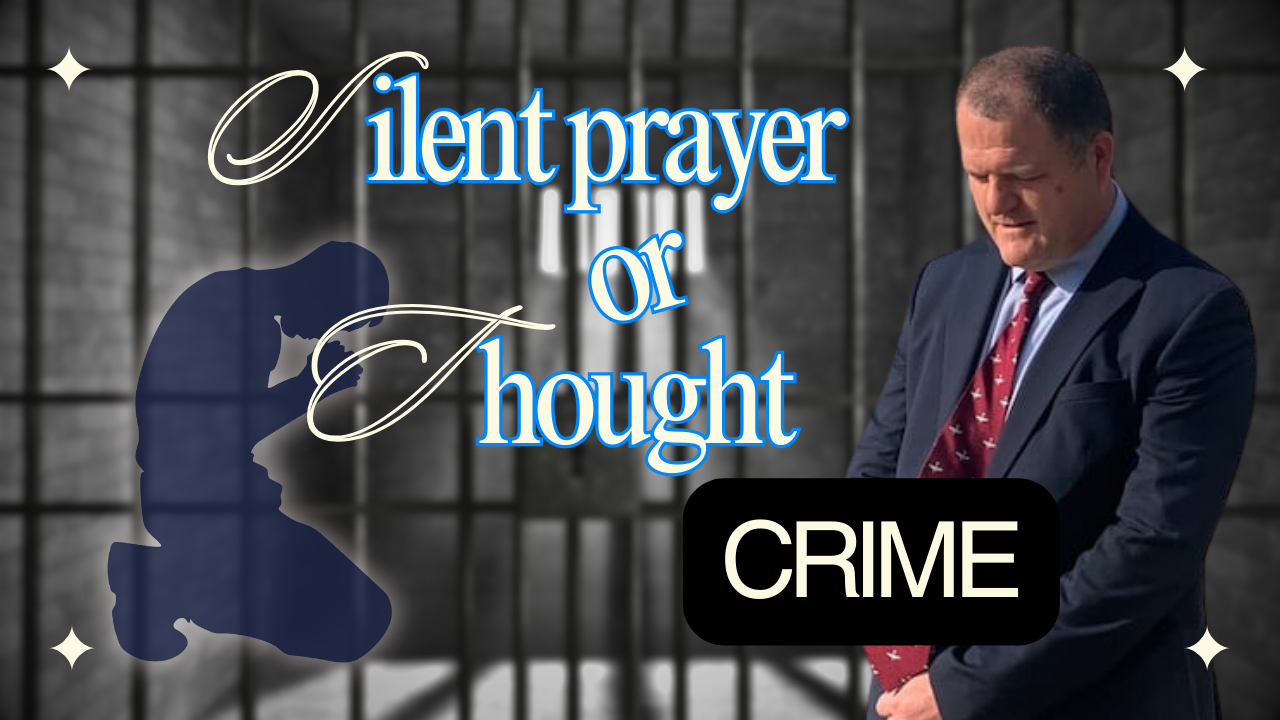
In a case that has sparked significant controversy, Adam Smith-Connor, a British Army veteran, was recently found guilty of violating a Public Spaces Protection Order (PSPO) by silently praying near an abortion clinic in Bournemouth, UK. This incident occurred on a public green, where Smith-Connor chose a spot by a tree, away from the facility, to pray for his deceased son for about three minutes. His silent act of prayer was interpreted as a form of protest against abortion, which led to his arrest and subsequent conviction.
Understanding Thought Crimes in the UK
The concept of “thought crimes” in the UK isn’t formally recognized under that name, but specific laws and orders criminalize what might be considered thoughts or silent expressions:
1. Public Spaces Protection Orders (PSPOs): PSPOs were introduced to control behaviors in public spaces and can be tailored by local authorities to prohibit specific activities within defined areas. Critics argue these can infringe on personal freedoms, including the freedom to express one’s beliefs silently.
2. Anti-Social Behavior, Crime, and Policing Act 2014: This legislation gives police and local councils powers to address activities deemed to have a “detrimental effect” on the quality of life of those in the locality, which can be interpreted broadly.
3. Hate Crime Legislation: While primarily aimed at protecting individuals from hate based on certain characteristics, there’s a thin line where the expression of certain beliefs could be misconstrued or penalized as hate speech.
Enforcement: Enforcement of these “thought crimes” often relies on interpretation:
– Surveillance: Use of CCTV and police presence in sensitive areas.
-Public Reporting: Encouragement for the public to report suspicious or ‘anti-social’ behavior.
– Judicial Discretion: Judges and magistrates interpret the law, often leading to debates over freedom of expression versus public order.
Why This Should Matter to the USA:
The case of Adam Smith-Connor resonates beyond the UK for several reasons:
1. Freedom of Speech and Religion: Both the US Constitution’s First Amendment and the UK’s commitments under the European Convention on Human Rights protect freedom of speech and religion. The conviction raises questions about how these freedoms are interpreted and protected, setting precedents that could influence global jurisprudence.
2. Precedent for Thought Policing: If silent prayer can be criminalized, this might encourage similar restrictive measures in other democratic countries, potentially threatening the very essence of personal freedom. With our strong emphasis on individual liberties, citizens of the USA should note such trends as they could influence future legal or cultural shifts.
3. Cultural Exchange and Influence: Legal and cultural trends in the UK can influence American policy and public opinion. A drift towards restricting silent expressions of belief could inspire similar movements or legislation in the US, where debates over the limits of free speech are already contentious.
4. Global Democratic Health: The health of democracy in one nation can affect others. Restrictions on what might be deemed innocuous private acts like silent prayer might signal a broader retreat from liberal democratic values, which should concern proponents of democracy worldwide.
BREAKING: British Army veteran Adam Smith-Connor has just been found GUILTY of praying silently.
He was praying for his dead son, out of the way, by a tree on a public green across the street from an abortion facility.
This is the first conviction for a thought crime in the UK. https://t.co/IsLOkhRkva
— Billboard Chris
(@BillboardChris) October 16, 2024


To be very clear, Adam Smith-Connor’s conviction for silently praying is more than a local UK issue; it is a litmus test for how modern democracies balance order with individual freedoms. Additionally, the case of Smith-Connor stands out due to its stark illustration of someone being penalized explicitly for a silent, internal act – praying, which many see as the epitome of thought. While not the first in the broader sense of punishing expression or belief, it is among the first or at least the most clear-cut public cases in the contemporary UK where the act in question was so introspective and non-disruptive.
For Americans and others around the globe, this case serves as a cautionary tale of how easily the line between public safety and personal liberty can blur, urging a vigilant defense of the fundamental rights to think and believe freely.