Contributor News
Sharia, Socialism, and the NYC Mayoral Race: A Warning Shot for America?
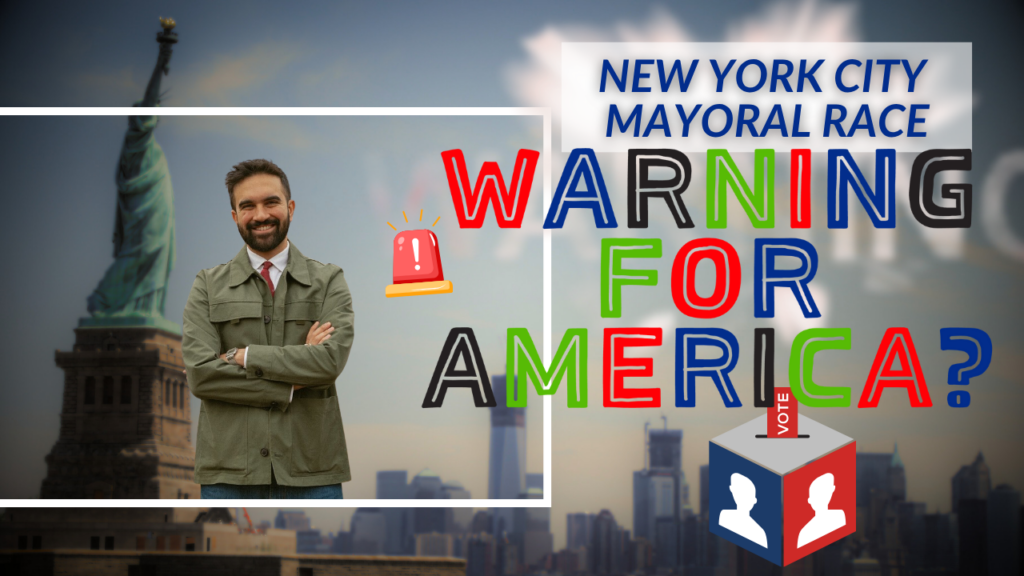

On Tuesday night, Andrew Cuomo bowed out of the Democratic primary for NYC Mayor. The win went to 33-year-old Democrat socialist and Assembly member Zohran Mamdani. While his campaign focused on progressive economic promises, the growing conversation around Mamdani isn’t just about policy—it’s about ideology, identity, and influence.
A Personal Story Tied to Faith and Politics
Born in Kampala, Uganda, Mamdani moved to New York with his family at age 7. His official bio highlights that he’s the first South Asian man, first Ugandan, and third Muslim elected to the New York State Assembly. He also openly identifies as a Shia Muslim, though his campaign materials and public appearances don’t go into detail on religious practice or how closely he adheres to Islamic law (Sharia).
That absence hasn’t stopped critics from asking tough questions—particularly in light of Mamdani’s increasing popularity, radical platform, and controversial statements.
What Is Sharia Law—and Should We Be Concerned?
Sharia, drawn from the Quran and Hadith, provides religious guidelines for personal, social, and sometimes legal conduct among Muslims. Its application varies by country: some nations integrate Sharia into criminal and civil codes (like Saudi Arabia), while others—such as Turkey—limit it to personal matters like marriage and inheritance.
In the U.S., Sharia has no legal standing. Under the Supremacy Clause of the Constitution, religious laws cannot override civil law. Still, critics assert that some interpretations of Sharia conflict with U.S. values, particularly where equal protection, women’s rights, or freedom of expression are concerned. Even limited forms of religious arbitration, like those allowed in the U.K., have triggered concerns about parallel legal systems developing within democratic societies.
Are Sharia-Based Enclaves Emerging in the U.S.?
While there’s no evidence of formal “Sharia law” governance anywhere in America, growing Muslim populations in cities like Dearborn (MI), Paterson (NJ), Minneapolis (MN), and Houston (TX) have fueled speculation about the potential for religious influence over civic life. In Dearborn, for example, Muslims now make up about 30% of the population, and the city has made headlines for its vocal involvement in issues like blasphemy laws and LGBTQ curriculum opposition.
Still, cultural presence doesn’t equal political theocracy—but critics argue that politicians like Mamdani could normalize ideologies that slowly chip away at constitutional governance, especially if paired with aggressive socialist agendas.
Mamdani’s Platform: A Socialist Vision for NYC
Mamdani’s campaign offered a deeply progressive platform:
Government-run grocery stores to address food deserts
Free public bus service
Universal childcare
Rent control and housing freezes
200,000 new affordable units over the next decade
Supporters hail this as compassionate and overdue. Conservative investigator and author Christopher Rufo argues that Zohran Mamdani is not an Islamist but a regime leftist who skillfully uses the symbols of the exotic Other and the outward appearance of the Third World oppressed, combined with the inward politics of the average white DSA leftist. If Mamdani wins the general election, Rufo suggests America might witness a real-time experiment in socialist economics.
The Netanyahu Controversy
Mamdani also drew national criticism for recently declaring:
“As mayor, New York City would arrest Benjamin Netanyahu.”
He was referencing the International Criminal Court (ICC) arrest warrant for the Israeli Prime Minister, but legal experts swiftly pointed out that no U.S. city mayor has authority to enforce international law—especially against a head of state protected by diplomatic immunity. The comment, seen by many as performative and inflammatory, has raised fresh concerns about Mamdani’s understanding of his constitutional limits and the tone he’s setting for U.S.-Israel relations.
Conservative Reactions: Rufo and Mek Speak Out
On Wednesday, both Christopher Rufo and Amy Mek responded publicly to Mamdani’s primary win.
Rufo dissected Mamdani’s platform and warned of its economic dangers, calling it “charismatic but economically disastrous.” Rufo also compares him to AOC, and notes how both have shrewdly selected political districts to build the appearance, and eventually the reality, of a national movement. He points to Mamdani’s promotion of “city-owned grocery stores”—an idea Rufo says is plucked straight from the histories of Third World communism—as an example of his compelling yet utterly destructive ideas.
Amy Mek, known for her investigative work with the RAIR Foundation USA, went further. She cited the win as an example of growing “radical Islamic influence” in American politics, referencing Mamdani’s background and the broader push by groups like CAIR. Mek also highlighted the EPIC City project in Plano, Texas—a proposed Muslim-centric development—as an example of how religious identity is increasingly tied to urban planning and political organizing.
A Historical Warning: The Communist Control Act
The Communist Control Act of 1954, passed during the Cold War, made it illegal to support or promote organizations deemed “communist action groups.” While largely dormant today, some scholars and commentators wonder if its precedent—banning ideologies incompatible with U.S. governance—could theoretically be applied to rising movements rooted in Sharia-adjacent or authoritarian socialist ideals.
There are no current legal efforts to revive the Act in this context, but it underscores growing public concern: what happens when imported ideologies begin shaping domestic policy?
Why It Matters
For voters, Mamdani’s win is a reminder that identity politics and economic frustration can create a potent—and unpredictable—mix. His charisma and ambitious promises have earned him grassroots support, especially among NYC’s disillusioned, working-class residents. But critics argue his worldview could clash with the U.S. Constitution, especially if his policies lean toward theocratic or socialist governance incompatible with the nation’s legal foundations.
The stakes go far beyond one mayoral race.
This is about the trajectory of the country itself:
Will voters continue to embrace experimental ideologies that blur the line between faith and policy, equity and control? Or will they return to governance rooted in constitutional clarity, free-market principles, and national unity?