Contributor News
SCOTUS Opened the Door — Now Southern Republicans Are Redrawing the House Battlefield for 2026

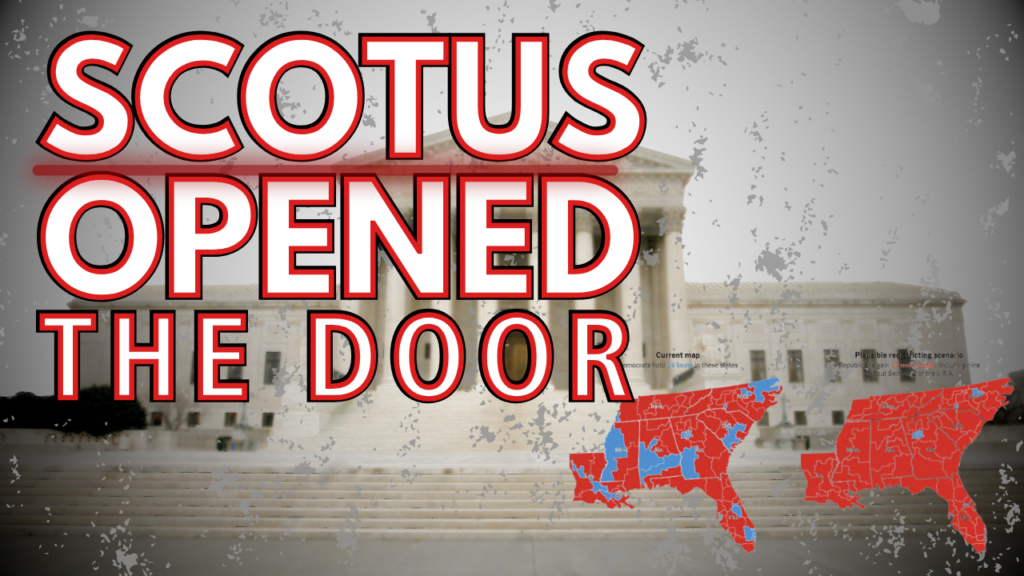
In last week’s article, we laid out how redistricting battles in Virginia, Florida, and the Supreme Court’s landmark 6-3 ruling in Louisiana v. Callais made one thing crystal clear: the 2026 midterms aren’t just another election, they’re the redistricting election that will decide who controls the House for the next decade. Tennessee’s Republican-led legislature approved a U.S. House map just today that splits a historically majority-Black district in Memphis.
The momentum hasn’t slowed; it has exploded. Just days later, Republican governors and legislatures across the South are piling on, using the SCOTUS decision to redraw maps aggressively and lock in gains ahead of November. Alabama, Tennessee, and South Carolina are moving fast. Democrats are screaming “rigging” and flooding hearings with protests, but Republicans are simply exercising the power voters entrusted to them. Your turnout in 2026 will decide whether these victories become a commanding GOP House majority or get tied up in endless lawsuits.
This week, May 5-7, 2026, Republican governors and legislatures in Alabama, Tennessee, and South Carolina moved aggressively to redraw congressional maps. They’re capitalizing on the SCOTUS decision that dramatically weakened the left’s favorite weapon: race-based gerrymandering claims under the Voting Rights Act. The message from these red states is unmistakable: We control our own maps, we’re not waiting for the next census, and we’re not letting activist courts or Democrat lawfare dilute conservative votes. For conservatives, this is pure momentum. But it’s also a five-alarm signal that the 2026 midterms cannot be ignored. Democrats are screaming “rigging” and flooding hearings with protests. Republicans are simply using the power voters gave them at the state level, exactly as the Constitution intends. Your turnout in November will decide whether these gains stick and whether the GOP House majority becomes a firewall for the next decade.
Here’s the latest from the front lines, why every state’s unique redistricting rules make your vote matter more than ever, and the clear call to action for conservatives.
Alabama: Governor Ivey Calls Special Session to Unlock a Full GOP Sweep
Republican Governor Kay Ivey wasted no time. She summoned the Alabama Legislature into a special session this week to push new congressional maps and contingency plans for special primaries. Legislative committees quickly advanced bills (HB1 and SB1) that would allow the state to use a new congressional map designed to give Republicans a 9-0 advantage on Thursday.
Why the haste? A prior court order had forced a remedial map with two majority-Black districts (currently held by Democrats Terri Sewell and Shomari Figures). But after SCOTUS gutted the racial-gerrymandering loophole in the Louisiana case, Alabama Attorney General Steve Marshall filed emergency motions to lift the injunctions. The goal: Give the state a “fighting chance to send seven Republican members to Congress,” as GOP leaders put it. Democrats and Black Alabamians are furious, with emotional hearings and accusations of “disenfranchisement.” Republicans counter: This is color-blind fairness, not race-based engineering. The bills are moving at full speed even with ongoing primaries, proof that when conservatives control the levers, we act decisively.
Tennessee: GOP Targets the State’s Lone Democrat Seat with an Aggressive New Map
Governor Bill Lee called his own special session, and Tennessee Republicans didn’t hold back. On May 6, they unveiled and advanced a bold new congressional map that splits Memphis’s majority-Black Shelby County into three districts, all of which are set to be Republican-controlled. The move would effectively dismantle Tennessee’s only Democratic-held House seat, dispersing those voters into more secure GOP districts across western and central Tennessee. Committees in both chambers approved the plan and legislation to override the state’s usual ban on mid-decade redistricting. The House has already voted in favor. Protests broke out in hearings, and demonstrators, chanting and disrupting proceedings, were escorted out by state troopers. Democrats called it an attack on minority voters. Conservatives see it as smart politics: Tennessee’s population and voting patterns have shifted conservative, and the SCOTUS ruling now lets the legislature draw maps that actually reflect reality instead of racial quotas. President Trump publicly cheered these efforts, urging other states to follow suit. Tennessee is listening and delivering.
South Carolina: Republicans Take First Steps Toward a Map Redraw
South Carolina has joined the wave of Southern states considering redistricting, with Republicans moving to redraw majority-Black congressional districts after a recent U.S. Supreme Court ruling altered voter protections. Democrats are already crying foul, accusing colleagues of “abiding by Trump’s desires” instead of waiting for the next census. But GOP leaders argue it’s responsible governance: Review the maps now, ensure they’re fair, legal, and defensible, and protect conservative representation before midterms. While Alabama and Tennessee are not yet at the full special-session stage, South Carolina’s move shows the domino effect. The Southern redistricting wave is real, and it’s gaining steam.
The Big Picture: State Rules + SCOTUS Momentum = Conservative Opportunity
These developments prove the point from last week’s article: Redistricting rules are state-specific, and that’s why midterms matter so much.
- Alabama and Tennessee (like Florida) give legislatures the clear authority to act, and Republicans are using it.
- South Carolina is testing the waters with committee action and public pressure.
- Contrast that with Virginia’s hybrid commission-and-amendment mess, which invited Democrat procedural tricks and court battles.
Democrats’ strategy is clear: Sue, amend, protest, and delay until they can flip enough House seats to neuter the GOP majority. Republicans’ strategy is simpler: Win elections, control statehouses, draw fair maps that reflect voter will, and defend them with the SCOTUS lifeline we just earned.
The alarm? If conservatives get complacent, these maps could end up in court or be reversed if Democrats gain ground in 2026. The rally? We have the momentum, the legal high ground, and the governors and legislators ready to deliver. States like Florida, Alabama, Tennessee, and potentially South Carolina could add multiple new Republican seats, turning a narrow House edge into a commanding one.
Your Vote in 2026 Draws the Lines for the Decade
This isn’t abstract legal wrangling. It’s the fight for the U.S. House, and for the America First agenda that depends on it. What conservatives must do right now:
- Turn out for every Republican House candidate in 2026. They’ll be the ones defending these maps in Congress.
- Support strong conservatives for state legislatures and governors’ mansions. They’re the ones holding the pen on redistricting.
- Stay laser-focused on your state’s specific rules. Know the process, watch the lawsuits, and don’t let Democrat delays or protests weaken our gains.
- Talk to your networks: Family, churches, gun clubs, veterans’ groups. Frame it plainly: “Midterms decide who draws the districts that decide Congress for the next ten years.”
The left is panicking because they know the SCOTUS ruling closed their favorite backdoor. Southern Republicans are responding with action. This week’s news from Alabama, Tennessee, and South Carolina shows conservatives aren’t just playing defense; we’re on offense. The 2026 midterms are no longer “just another election.” They’re the referendum on whether we lock in these map victories or let the left steal them back through the courts. Republicans have the tools. We have the momentum. Now it’s time to vote as though the future of the House depends on it, because it does. Let’s turn this redistricting wave into a Republican mandate.