
Contributor News
Scotland’s New Hate Speech Law And Why You Should Care

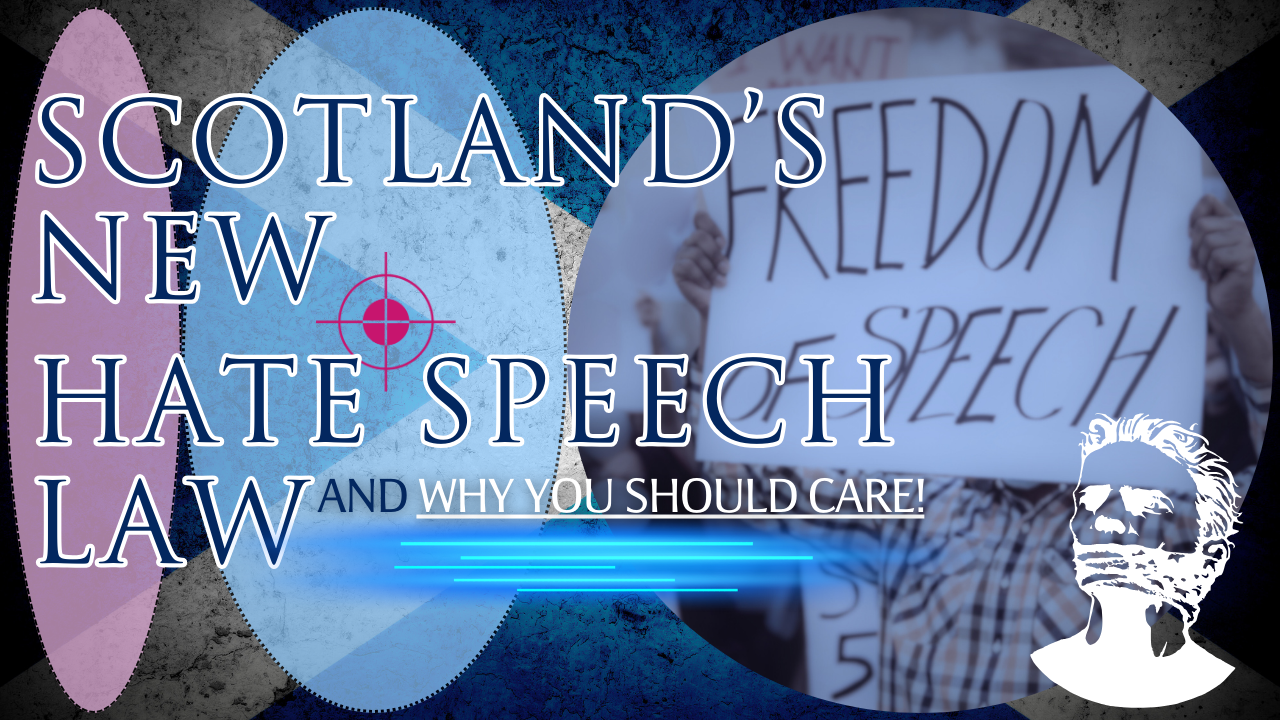
Scotland’s new hate speech law, officially known as the Hate Crime and Public Order (Scotland) Act, was passed by the Scottish Parliament in 2021 and came into effect this week on April 1, 2024. While the date of its enactment seems to be a joke, the Act itself is not and the law is indeed, quite real. The Act consolidates existing hate crime legislation and introduces a new offense of stirring up hatred against specific protected characteristics. These characteristics include age, disability, race, religion, sexual orientation, transgender identity, and variations in sex characteristics. Notably, sex was omitted from the protected characteristics list in this Act, with plans for a separate Bill to address misogyny.
The Act also raises the threshold for the “stirring up” offenses previously limited to race. Now, the stirring up of hatred based on any of the protected characteristics is prohibited. For race, the legislation has been in place since 1986. However, the new provisions for the other characteristics were added to streamline and update the criminal law in Scotland.
Critics of the new law have raised concerns about its impact on free speech, arguing that the broad definition of “stirring up hatred” could potentially criminalize certain forms of expression, including religious views or jokes deemed offensive.
Many took to social media to express their thoughts and views, including Michael Shellenberger, who posted on X (formerly Twitter). He brought up several key points, especially the impact on freedom of speech and how it could possibly extend beyond Scotland. Shellenberger referred to author, @JK_Rowling who, “rightly wrote on X that the law gives the government the power to arrest people who refuse to call male rapists and murderers ‘women’ and ‘she’ and ‘her’ if that’s what those men demand. The Hate Crime and Public Order Act of 2021 creates a new crime for ‘stirring up hatred,’ including related to trans identity. People can be arrested for things they say in the privacy of their own home. They can be arrested for simply being ‘insulting.’ And prosecutors need only prove your stirring up of hatred was ‘likely’ not ‘intended.” Shellenberger asserted, “You might think this all has nothing to do with you. You don’t live in Scotland. But it has everything to do with you. What you say online could be held as criminal hate speech in Scotland, simply by somebody reading it there. And it’s not just Scotland. In the US, pro-censorship forces hope a Supreme Court victory will let them once again ramp up censorship demands by the Department of Homeland Security and the FBI.”
The Act also raises the threshold for the “stirring up” offenses previously limited to race. Now, the stirring up of hatred based on any of the protected characteristics is prohibited. For race, the legislation has been in place since 1986. However, the new provisions for the other characteristics were added to streamline and update the criminal law in Scotland.
Critics of the new law have raised concerns about its impact on free speech, arguing that the broad definition of “stirring up hatred” could potentially criminalize certain forms of expression, including religious views or jokes deemed offensive.
Many took to social media to express their thoughts and views, including Michael Shellenberger, who posted on X (formerly Twitter). He brought up several key points, especially the impact on freedom of speech and how it could possibly extend beyond Scotland. Shellenberger referred to author, @JK_Rowling who, “rightly wrote on X that the law gives the government the power to arrest people who refuse to call male rapists and murderers ‘women’ and ‘she’ and ‘her’ if that’s what those men demand. The Hate Crime and Public Order Act of 2021 creates a new crime for ‘stirring up hatred,’ including related to trans identity. People can be arrested for things they say in the privacy of their own home. They can be arrested for simply being ‘insulting.’ And prosecutors need only prove your stirring up of hatred was ‘likely’ not ‘intended.” Shellenberger asserted, “You might think this all has nothing to do with you. You don’t live in Scotland. But it has everything to do with you. What you say online could be held as criminal hate speech in Scotland, simply by somebody reading it there. And it’s not just Scotland. In the US, pro-censorship forces hope a Supreme Court victory will let them once again ramp up censorship demands by the Department of Homeland Security and the FBI.”
THIS IS SCARY
Yesterday, a group of people in Scotland protested a new hate speech law. “The irony of this hateful, spiteful law coming into play on April’s Fools Day…” said one of the protesters. “Criminalizing free speech in this country is absolutely disgraceful.”
While I… pic.twitter.com/p4LX5NAuve
— Michael Shellenberger (@shellenberger) April 2, 2024
The legislation claims to include a “reasonableness” defense and compatibility with the European Convention on Human Rights to address these concerns.
Supporters of the Act argue that it is necessary to combat rising levels of hatred and prejudice and that the bar for prosecution is set high, requiring a high threshold of evidence. However, the Scottish Police Federation has criticized the law, citing concerns about its implementation and potential impact on police resources and public trust.
In theory, Scotland’s new hate speech law aims to protect individuals and communities from hate crimes by criminalizing the “stirring up of hatred” against specific protected characteristics. In reality, it has sparked significant debate and much controversy over its potential effects on free speech and the practical challenges of enforcement.
Supporters of the Act argue that it is necessary to combat rising levels of hatred and prejudice and that the bar for prosecution is set high, requiring a high threshold of evidence. However, the Scottish Police Federation has criticized the law, citing concerns about its implementation and potential impact on police resources and public trust.
In theory, Scotland’s new hate speech law aims to protect individuals and communities from hate crimes by criminalizing the “stirring up of hatred” against specific protected characteristics. In reality, it has sparked significant debate and much controversy over its potential effects on free speech and the practical challenges of enforcement.
Continue Reading