Contributor News
Operation Midway Blitz: Trump Takes Aim at Chicago’s Crime Surge and Sanctuary Policies
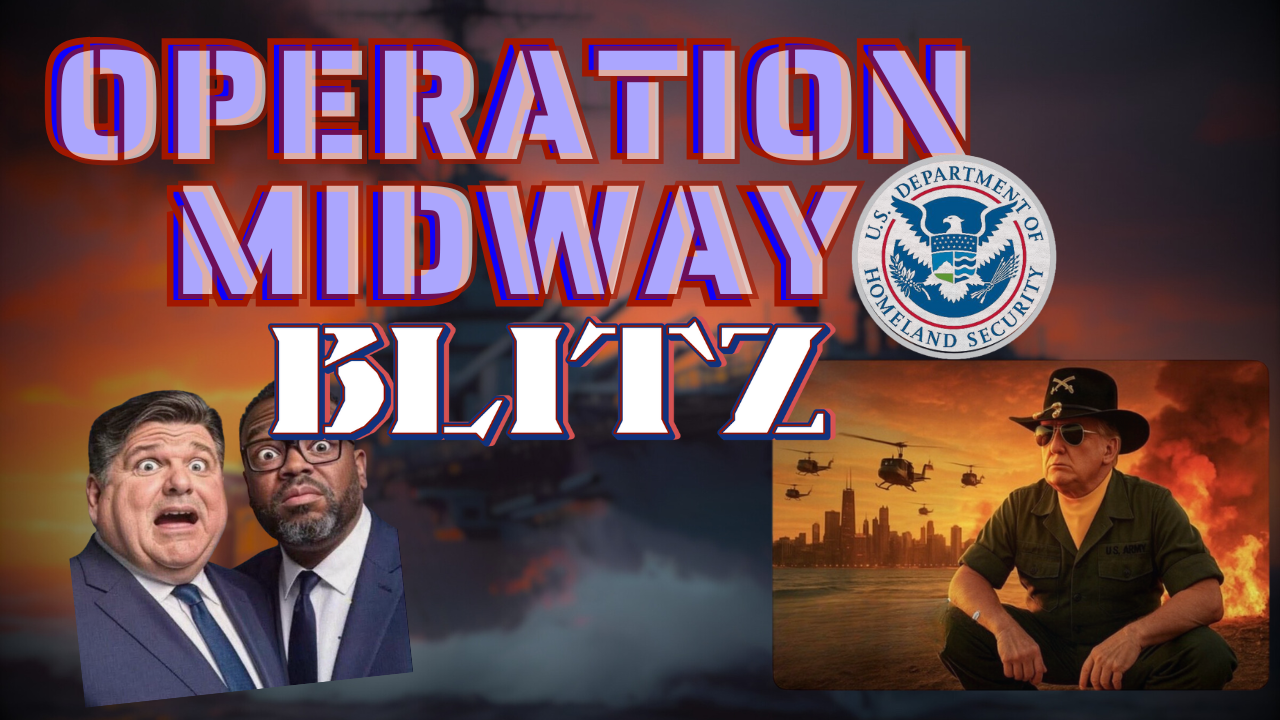

The battle over Chicago’s sanctuary city status has escalated into a high-stakes showdown between Illinois Democrats and the Trump administration. On September 8, the Department of Homeland Security (DHS) announced Operation Midway Blitz, a targeted immigration enforcement mission aimed at apprehending criminal illegal aliens who have repeatedly evaded deportation due to state and local non-cooperation with federal law.
The move comes as both Chicago Mayor Brandon Johnson and Governor J.B. Pritzker doubled down on their resistance, declaring that Illinois remains a sanctuary state and vowing to block federal immigration operations. Yet the statistics tell a different story — and many Chicago residents are growing increasingly frustrated.
DHS revealed that Cook County Jail ignored ICE detainers on a single illegal offender 12 separate times, allowing him to return to the streets despite violent charges. The operation was also named in memory of Katie Abraham, a 20-year-old Illinois woman killed in a hit-and-run earlier this year by illegal immigrant Julio Cucul-Bol, a case that drew national outrage after it was revealed he had a prior criminal record but was shielded from deportation under sanctuary policies.
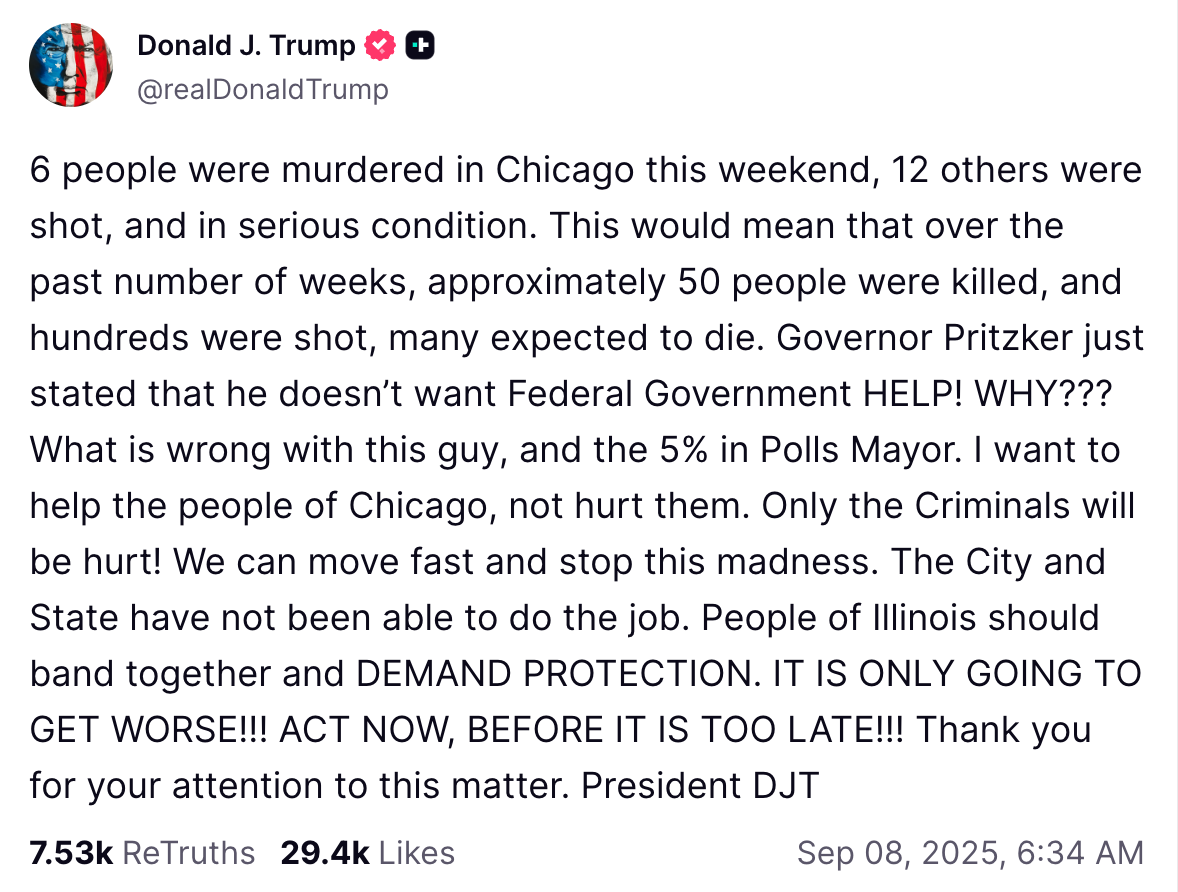
President Trump underscored the crisis with a direct message on Truth Social. He noted that six people were murdered in Chicago over the weekend and 12 more were critically wounded, adding that in recent weeks, “approximately 50 people were killed, and hundreds were shot.” Calling out Governor Pritzker for refusing federal assistance, Trump declared, “I want to help the people of Chicago, not hurt them. Only the criminals will be hurt! We can move fast and stop this madness.”

For the Trump administration, this isn’t just about immigration law — it’s about public safety. A 2021 study from the Center for Immigration Studies, using Department of Justice data, found that sanctuary jurisdictions experienced 16% higher crime rates linked to illegal immigrants compared to non-sanctuary areas. In Chicago, where homicides and gang violence already plague neighborhoods, critics argue these policies only worsen the crisis.
Trump pointed to the success of recent federal operations in Washington, D.C., where intervention dismantled violent gangs and restored order. He has pledged the same results for Chicago if local politicians stop blocking cooperation.
Not everyone is opposed. Many residents in affected neighborhoods have voiced support for federal action, contrasting sharply with the loud but limited protests organized by out-of-town activists and a handful of Democrat lawmakers. For families who’ve lost loved ones to violent crime, the debate isn’t about politics — it’s about survival.
Whether Illinois officials like it or not, Operation Midway Blitz signals that the administration is willing to push past political roadblocks to enforce federal law. The coming weeks will determine if Chicago’s leaders continue to resist, or if mounting public pressure forces them to reckon with the deadly consequences of sanctuary policies.