
Contributor News
NYC Primary Showdown: Cuomo’s Comeback vs. Mamdani’s Radical Agenda

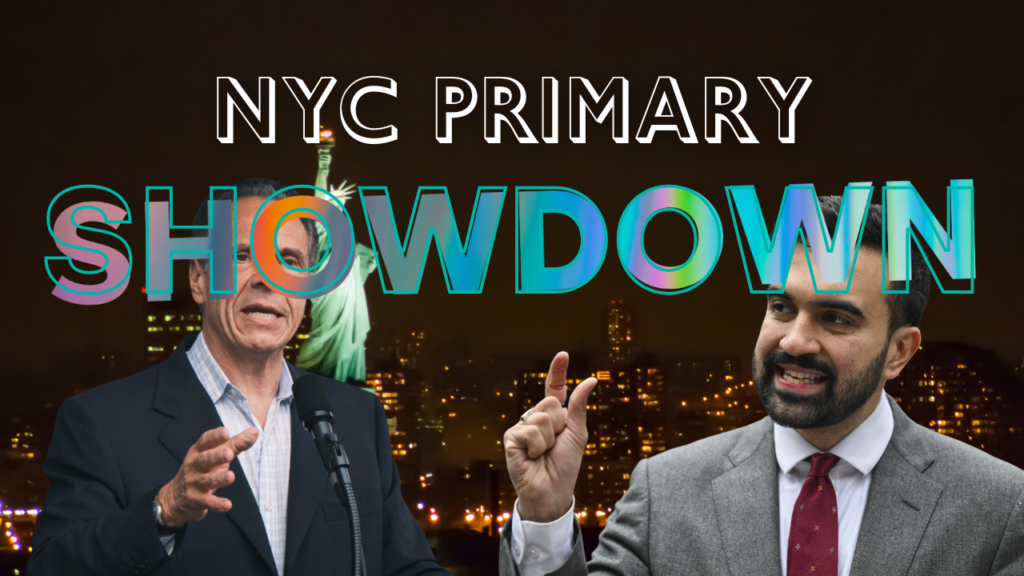
As New Yorkers cast their ballots in the Democratic primary, the race for mayor draws national attention— not just for the candidates. The contest between former Governor Andrew Cuomo and Muslim Assembly Member Zohran Kwame Mamdani, is a collision of experience vs. activism, pragmatism vs. ideology—and increasingly, reality vs. rhetoric.
Mamdani, a 33-year-old democratic socialist who identifies as a Shia Muslim emphasizing his Muslim faith as a central part of his political identity, has gained momentum with an aggressive platform that includes tax hikes on the wealthy, fare-free public transportation, rent freezes, government-run supermarkets, and free childcare.
A sizeable chunk of the Democrat voter base is economically illiterate and it’s a big problem. They don’t understand how markets work or how businesses run let alone the most complex details. I blame the education system + parents for neglecting to teach basic financial literacy. https://t.co/40Rhl719zG
— Robby Starbuck (@robbystarbuck) June 24, 2025
While his message has energized younger, far-left voters, critics point out that many of his proposals raise serious concerns about long-term cost, feasibility, and unintended economic consequences. His housing plan alone calls for building 200,000 affordable housing units in 10 years—an undertaking that has raised questions even among allies about logistics and funding.
But it’s Mamdani’s foreign policy rhetoric that seems to have brought the most backlash. The candidate was asked during an interview in November last year whether he would arrest Israel’s Prime Minister if he came to New York City. Mamdani answered
“As mayor, New York City would arrest Benjamin Netanyahu.”
During a Mayoral forum, Mamdani further explained his position on arresting Netanyahu while emphasizing his position on being in compliance with ICC (International Criminal Court).
Clip I took of last night’s Jewish Agenda mayoral forum, where Mamdani explained his position on arresting Netanyahu. pic.twitter.com/uVrMnuarmt
— David Weigel (@daveweigel) June 9, 2025
The statement—referring to the ICC’s controversial arrest warrant for the Israeli Prime Minister—was seen by many as dangerously out of touch with legal reality. It should be noted that the mayor of NYC has no legal authority to enforce international law or arrest a foreign head of state, especially one protected under the Vienna Convention on Diplomatic Relations. Others viewed it as political grandstanding that does little to address the urgent local issues New Yorkers actually face.
On the other side of the race, Andrew Cuomo, 67, is seeking a comeback after resigning in 2021 amid sexual harassment allegations. The former governor and longtime Democratic heavyweight has leaned into his decades of leadership, pitching himself as the candidate of stability and results. His platform includes targeted investments in mental health, affordable housing, public safety, and combating rising anti-Semitism in the city. While Cuomo’s reputation remains complicated, he’s secured support from a more centrist leader like Bill Clinton and other Democrat politicians like Mike Bloomberg and Jim Clyburn, and he currently leads in most polls.
The Ranked-Choice Twist—And Its Complications
This year’s primary uses ranked-choice voting, allowing voters to select up to five candidates in order of preference. Supporters argue it promotes fairness and broader representation, but critics say it often causes confusion among voters, dilutes clear majority support, and—perhaps most frustratingly—delays election results by days.
In close races like this, ranked-choice can stretch out the process, leading to uncertainty and mistrust. Many voters are still unaware of how their votes are reallocated in later rounds, and a winner might not be declared until days—possibly a week—after voting ends. It’s a system that has proven anything but efficient in high-profile contests like this one.
More Than a Mayoral Race
Beyond the local implications, this race underscores a broader national struggle within the Democratic Party. Mamdani’s rise—amplified by social media followers and a highly mobilized activist base—represents the far-left’s attempt to reshape the party’s platform and priorities. His critics argue that he offers aspirational rhetoric that risks overpromising and underdelivering instead of practical solutions.
While certainly not without baggage, Cuomo offers a familiar and seasoned presence. His campaign has emphasized capability, legal realism, and a return to stable governance—appealing to moderate and older voters uneasy with extreme swings in either direction.
As the city waits—possibly for days—for ranked-choice tabulations to play out, one thing is clear:
This race is no longer just about who should be mayor. Voters are being asked to choose between two very different visions—not just for New York City, but for the future of the Democratic Party and the country itself.
On one side is a wave of increasingly extreme progressive activism, which critics warn is beginning to stretch—and in some cases, outright challenge—the constitutional and legal framework on which our nation was built. On the other is a more centrist, experience-driven path that, while imperfect, still operates within the boundaries of law, order, and democratic norms.
The deeper question now isn’t just about policies—it’s about governance, responsibility, and whether voters will endorse rhetoric and radicalism or return to something closer to stability and constitutional common sense.