
Contributor News
NPR’s CEO, Media’s “Commissar” Of Censorship?

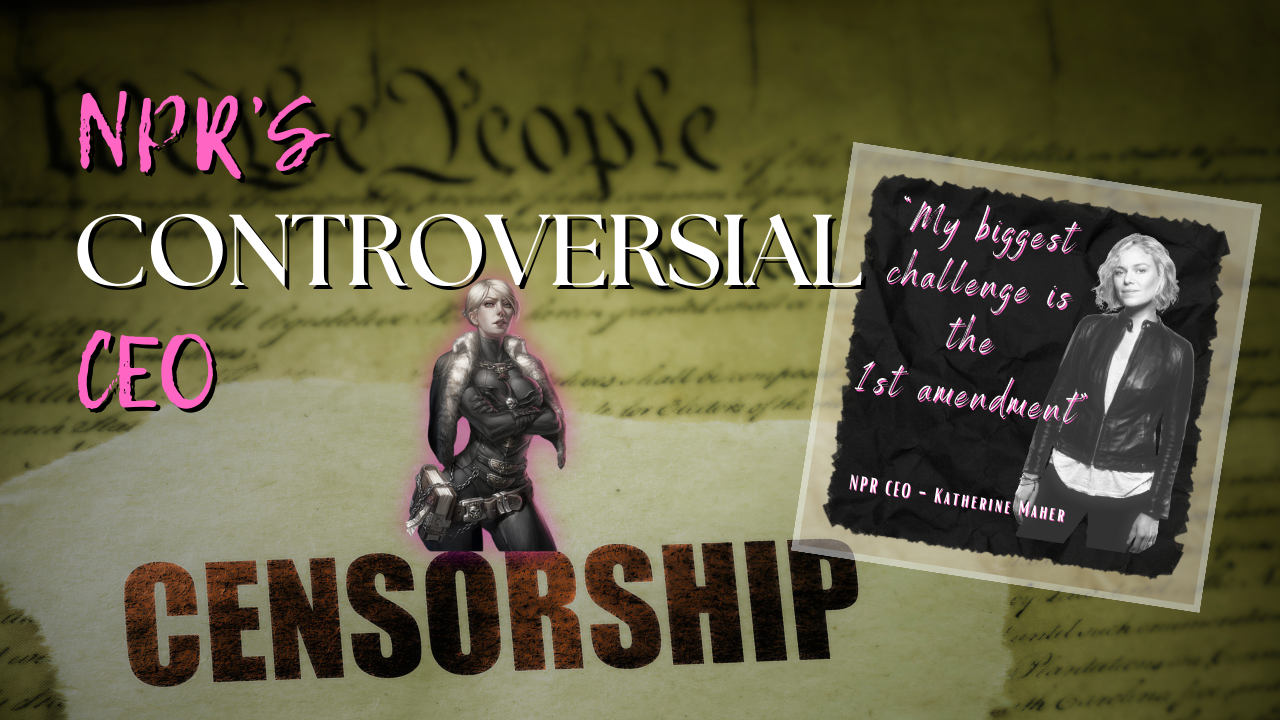
NPR (National Public Radio) is a nonprofit media organization in the United States that produces and distributes news and cultural programming. Known for its journalism and range of programs, it hired Katherine Maher as its new CEO at the beginning of the year. She assumed the role of President and CEO of NPR on March 25, 2024, succeeding John Lansing. Maher has quite the background, including her time as the CEO and executive director of the Wikimedia Foundation and as the CEO of Web Summit, a technology conference. She is also a nonresident senior fellow at the Atlantic Council’s Digital Forensic Research Lab. Maher has served on the Council on Foreign Relations and the board of directors of the Signal Foundation, among other positions. Not surprisingly, she also has a profile listed on the World Economic Forum’s site.
Concerns began surfacing not long after the announcement of Maher’s background, beliefs, and practices, including her connection and work with The Atlantic Council. According to Wikipedia, The Atlantic Council “is an American think tank in the field of international affairs, favoring Atlanticism, founded in 1961. It manages sixteen regional centers and functional programs related to international security and global economic prosperity. Their headquarters are located in Washington, D.C., and are a member of the Atlantic Treaty Association.[2]
Maher has been at the center of controversy after NPR’s senior editor, Uri Berliner, resigned on Wednesday. The resignation came after Berliner publicly accused NPR of liberal bias, criticizing its coverage of several significant stories. Berliner’s essay claimed that NPR was catering to a specific worldview and had lost the public’s trust. A veteran journalist at NPR, Berliner, wrote the piece in his Substack on April 9, 2024, expressing his concerns about the organization. This critique sparked significant internal and external debate, leading to Berliner’s resignation from NPR.
The controversy was exacerbated by tweets written in 2018 by Maher expressing disdain for former President Donald Trump, which were highlighted in the wake of Berliner’s resignation. These tweets, along with her views expressed during a Ted talk on “truth,” and additional posts showing her liberal views, including concerns cited by Elon Musk, contributed to the controversy.
This keeps getting crazier! The head of NPR hates the Constitution of the USA. https://t.co/1Xp8Pi12fs
— Elon Musk (@elonmusk) April 17, 2024
Here’s the new NPR CEO Katherine Maher (and former chief executive of Wikipedia) explaining that “the truth” is an outdated concept.
Everyone can have their own truth:
— End Wokeness (@EndWokeness) April 17, 2024
Current CEO of NPR Katherine Maher in 2021, back when she worked for Wikipedia, literally talking about rewriting history because it currently favors white people. pic.twitter.com/9oEJlomJrF
— MAZE (@mazemoore) April 17, 2024
This situation has led to discussions about the role of public media, its political neutrality, and the challenges of maintaining trust in an increasingly polarized media environment.