
Contributor News
NIH to Research Link Between SSRIs and Violence After Minnesota School Tragedy

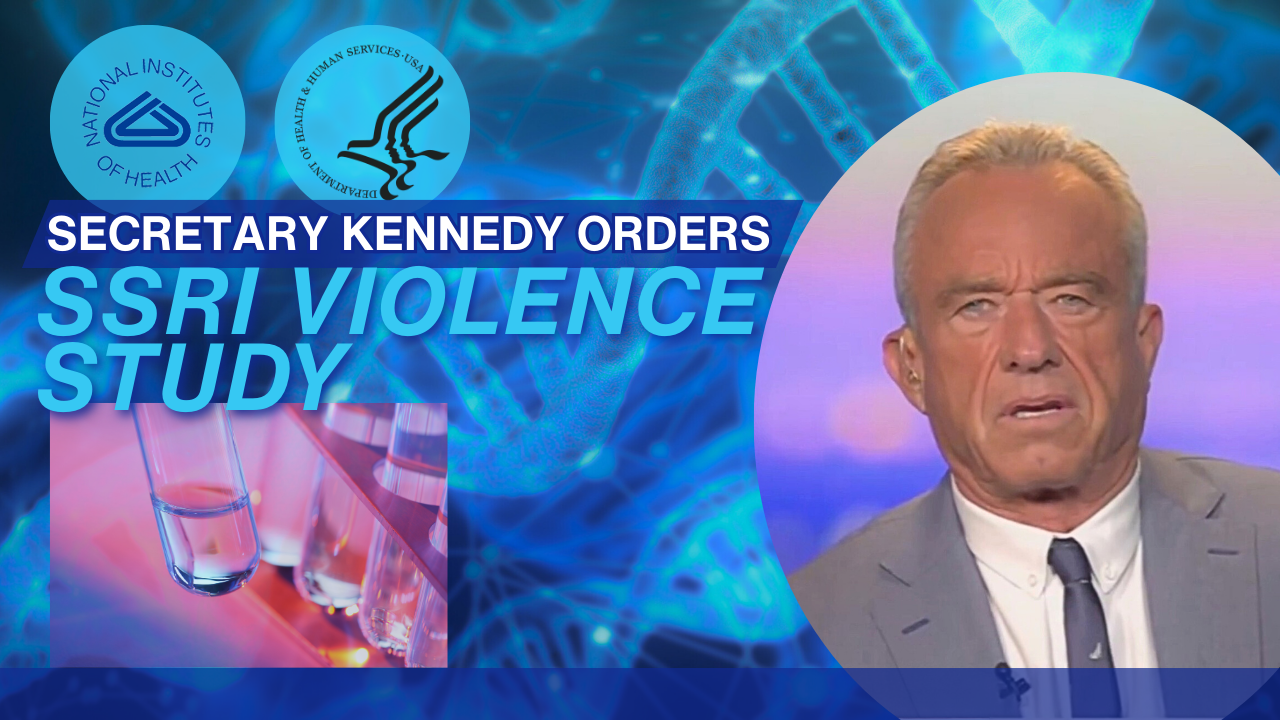
On Wednesday, an unthinkable tragedy struck at Annunciation Catholic School in Minneapolis, which left two children dead and seventeen others wounded—fourteen of them children—in an unimaginable act of violence during their first week of school. The attack, which unfolded during Mass, has left a community devastated and families grieving. Not surprisingly, the tragic event has sparked fresh debate on several contentious issues: mental health treatment, the role of SSRIs (Selective Serotonin Reuptake Inhibitors), and patterns of violence among individuals identifying as transgender.
The Incident
Authorities confirmed that the suspect was armed with multiple firearms and carried hundreds of rounds of ammunition. The swift response of local law enforcement prevented even greater loss of life. Minnesota Governor Tim Walz called the shooting “a horrific act of violence against a place of faith and learning.” At the same time, Catholic leaders across the nation expressed grief and solidarity with the victims. The suspect was identified later as a transgender individual who took their own life at the scene. A manifesto was later discovered where hatred was clearly expressed toward Christians, Jews, and supporters of President Trump. The incident has also been classified as domestic terrorism by the FBI.
Pattern of Violence Among Transgender Individuals
While law enforcement continues to investigate, this shooting has renewed focus on previous high-profile cases where individuals identifying as transgender or non-binary carried out acts of violence. Below is a condensed fact box highlighting key incidents:
📌 Fact Box: Violence Involving Transgender or Non-Binary Individuals
- Nashville, TN (March 27, 2023): Audrey Hale, transgender, killed 6 at Covenant School, a Christian elementary school.
- Colorado Springs, CO (November 19, 2022): Anderson Lee Aldrich, later identified as non-binary, killed 5 at the LGBTQ+ nightclub Club Q.
- Aberdeen, MD (September 20, 2018): Snochia Moseley, transgender, killed 3 in a workplace shooting at a Rite Aid distribution center.
- Denver, CO (May 7, 2019): Alec McKinney, transgender teen, killed 1 and injured 8 at the STEM School Highlands Ranch.
- Portland, OR (2019–2023): Multiple violent incidents involving transgender Antifa members documented by journalist Andy Ngo.
- San Francisco, CA (June 30, 2023): Transgender individual injured multiple people during a Pride event altercation.
- Seattle, WA (July 4, 2023): Transgender individual was arrested after assaulting several people during Independence Day unrest.
Note: Some events, such as Antifa-related violence, are primarily documented by journalist Andy Ngo.
SSRIs and Violence: The Research
Another factor under discussion is the possible connection between SSRIs and violent behavior. In response to growing concerns, Health and Human Services Secretary Robert F. Kennedy Jr. announced Thursday morning that NIH has been directed to formally research the potential role of SSRIs in violent incidents.
Appearing on Fox News Thursday morning, Kennedy was asked by Brian Kilmeade: “You are dealing with a person who is trans, there was transitioning. Are you going to be examining at all some of the drugs that are used in order to make that transition happening, to see if it plays a role?” That’s when Secretary Kennedy made the announcement: “We are doing those kind of studies now at NIH.” “We’re launching studies on potential contribution of some of the SSRI drugs and other psychiatric drugs that might be contributing to violence.” “Many of them—have black box warnings that warn of suicidal ideation and homicidal ideation. We can’t exclude those and those are studies we’re doing.”
In the wake of yesterday’s horrific mass shooting at Annunciation Catholic Church in Minneapolis, Minnesota, the facts are beginning to come in, and once again, the shooter was transgender.
It’s a data point on a disturbing and increasingly visible trend.
Transgender Americans… pic.twitter.com/7rgSA9l9ec
— The Vigilant Fox 🦊 (@VigilantFox) August 28, 2025
Several peer-reviewed studies suggest a potential link:
- Healy et al. (2017, BMJ): Found SSRIs increase risk of suicide, violence, and homicide across age groups; aggression doubled in some cases.
- Fazel et al. (2015, ScienceDirect): Found people aged 15–24 on SSRIs had a 43% higher risk of committing violent crime while on the medication.
- Healy (2004), Let Them Eat Prozac: Documented side effects such as agitation and akathisia, which can precede violent acts.
Kennedy also pointed to a major blind spot in the system: HIPAA privacy laws, which have long shielded the data needed to examine the effects of these medications.
He went onto say, “There are black box warnings on some of these psychiatric drugs that warn about in their clinical trials, they saw suicidal and homicidal ideation.”
“We are going into that with an open mind.”
“A lot of studies have not been done in the past because of HIPPA regulations, which protect the privacy of patients.”
That’s no longer going to stop him.
“But it’s something that right now we are looking at.”
“We NEED to look at it and we need to explain why all this violence is happening and need to look at every possibility.”
So why hasn’t this already been investigated?
Kennedy pointed to a major blind spot in the system: HIPAA privacy laws, which have long shielded the data needed to examine the effects of these medications.
But the troubling warning signs have been there all along.
They were… pic.twitter.com/IlMugZJRtc
— The Vigilant Fox 🦊 (@VigilantFox) August 28, 2025
By directing NIH to investigate, the administration is signaling that this line of inquiry is not fringe speculation but a legitimate public health concern. The findings could have significant implications for how antidepressants are prescribed and monitored in the future.
A Broader Debate
The Visitation School tragedy underscores the complex intersection of gender identity, psychiatric treatment, and violence. Secular advocates caution against stigmatizing entire groups, while others argue that patterns and risk factors must be addressed openly to prevent future tragedies. As the investigation unfolds, policymakers and the public face difficult questions about how best to balance compassion, safety, and accountability.