
Contributor News
Judicial Overreach? Judge Blocks Trump’s Plan to Deport Deadly Venezuelan Gang

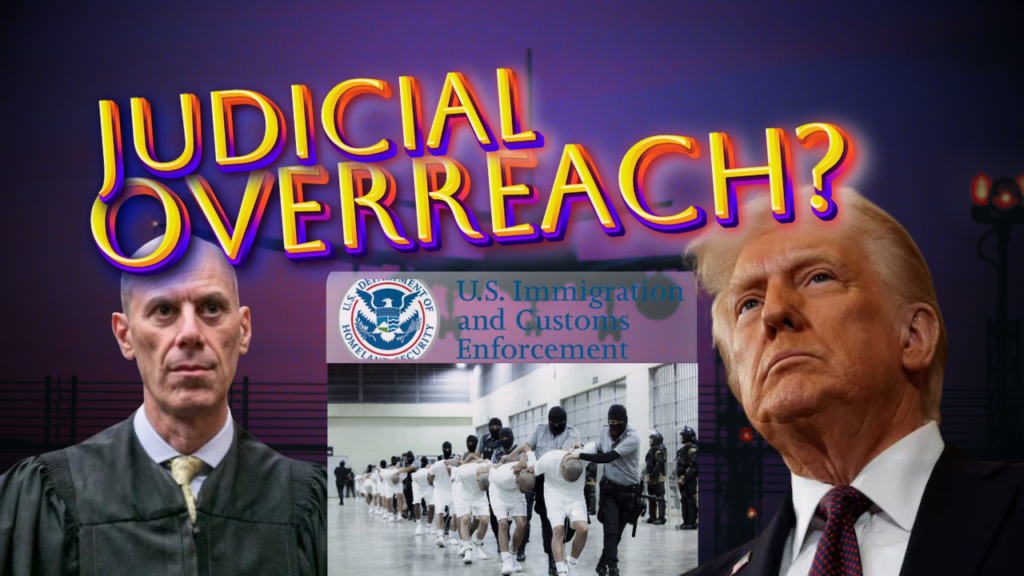
A fierce legal and political showdown is unfolding as President Donald Trump’s aggressive deportation campaign. His deportation plan includes the dangerous Venezuelan gang Tren de Aragua (TdA) but was met with resistance by Judge James E. Boasberg. Judge Boasberg’s actions sparked outrage, including calls for the judge’s impeachment. The Trump administration’s invocation of the Alien Enemies Act to deport TdA members—linked to over 100 murders in the U.S.—met with resistance by Boasberg’s weekend ruling is now seen as an unconstitutional overstep of executive power, igniting a national immigration emergency debate.
Trump’s Bold Move to Secure America
On Saturday, President Trump issued an executive order invoking the 1798 Alien Enemies Act, a wartime law, to target TdA, a transnational criminal organization terrorizing U.S. cities with human trafficking, drug trafficking, and violent crimes. The White House announced the successful deportation of nearly 300 alleged TdA members, declaring it a critical step to protect American lives amid an “invasion” at the southern border. This action aligns with Trump’s January 2025 national emergency declaration on immigration, emphasizing his constitutional authority to secure the nation’s borders and remove dangerous criminals.
Judicial Overreach Sparks Controversy
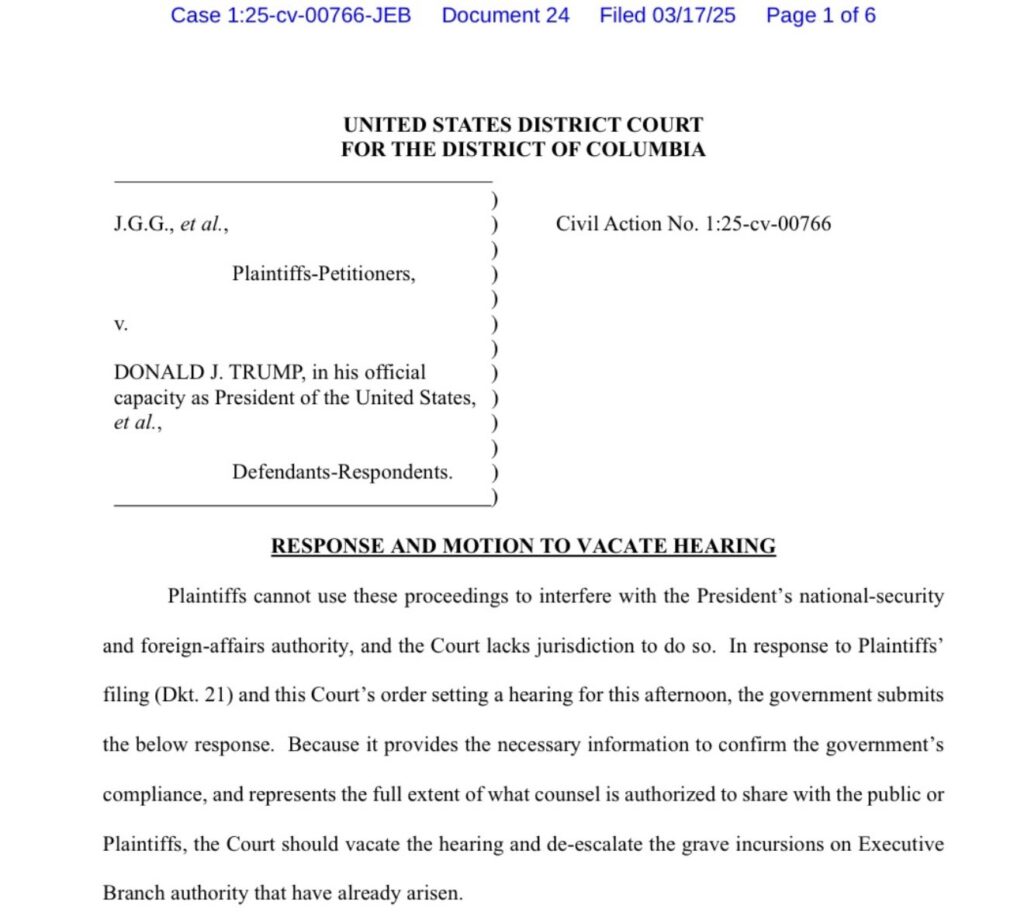
However, U.S. District Judge James E. Boasberg, based in the District of Columbia, issued a temporary block on these deportations late Saturday, arguing it interfered with due process. Boasberg’s order targeted flights deporting TdA members, prompting the Trump administration to argue that the judge’s ruling oversteps judicial boundaries, infringing on the President’s national security and foreign affairs powers. The Department of Justice (DOJ) slammed the hammer down in court documents, asserting, “Plaintiffs cannot use these proceedings to interfere with the President’s national-security and foreign affairs authority, and the Court lacks jurisdiction to do so.”
During a heated Monday hearing, Boasberg expressed incredulity at the DOJ’s claim that his verbal order to turn around deportation flights held no authority once planes entered international airspace. The administration countered that operational details, including flight specifics, are classified due to national security concerns, further escalating tensions between the judiciary and executive branch.
Calls for Impeachment Gain Traction
The standoff has fueled bipartisan outrage, with conservative lawmakers and legal experts accusing Boasberg of judicial overreach and undermining Trump’s executive power. Reports emerged on Monday that House Republicans are launching an impeachment investigation into Boasberg, citing his actions as a direct challenge to presidential authority during a critical immigration emergency. Rep. Jim Jordan (R-OH), chair of the House Judiciary Committee, stated, “Judge Boasberg’s rulings threaten national security and defy the Constitution. We will not tolerate activist judges usurping the President’s power to protect Americans from Tren de Aragua’s violence.”
Legal scholars are divided, but some argue that Boasberg’s interpretation of his jurisdiction could set a dangerous precedent, weakening executive authority in matters of national security and immigration. The Brennan Center for Justice warns of potential abuses of the Alien Enemies Act, but critics of Boasberg contend his actions prioritize politics over law, especially given TdA’s documented atrocities.
Public Support for Trump’s Deportation Policy
Public sentiment overwhelmingly favors Trump’s deportation efforts, with over 70% of Americans supporting mass deportation of criminal gangs like TdA, according to recent polls. The White House Press Secretary Karoline Leavitt emphasized, “President Trump is acting for the people, saving countless American lives by deporting Tren de Aragua terrorists.”
White House Deputy Chief of Staff Stephen Miller spoke in depth in an interview with CNN today.
Watch:
WATCH IN FULL: White House Deputy Chief of Staff @StephenM schools Fake News CNN’s @kasie on the Constitution, the separation of powers, and the rule of law. pic.twitter.com/2TMnKyBLwk
— Rapid Response 47 (@RapidResponse47) March 17, 2025
“This is not judicable”
-Stephen MillerHe is correct. The President’s authority to expel alien combatants is not subject to a Court. The law explicitly states they can be removed in the President’s order and WITHOUT ANY HEARING.
Case Closed. pic.twitter.com/O6gwGlskWE
— DOC (@doctormalibu) March 17, 2025
The Path Forward: Legal and Political Battle Intensifies
The Trump administration remains steadfast, refusing to back down from its deportation flights despite Boasberg’s orders. The DOJ has demanded the court vacate the hearing and de-escalate what it calls “grave incursions on Executive Branch authority.” Meanwhile, Boasberg has requested clarification by Tuesday noon on whether the administration violated his order, setting the stage for a historic clash between judicial and executive powers.
As the impeachment investigation into Boasberg gains momentum, legal experts predict a landmark Supreme Court case could determine the scope of presidential authority under the Alien Enemies Act and the limits of judicial oversight in immigration emergencies. For now, the President’s supporters rally behind his unyielding stance, while critics warn of potential constitutional crises.