
Contributor News
Iran-Israel Conflict Escalates: How Trump’s Foreign Policy Could Influence the Outcome

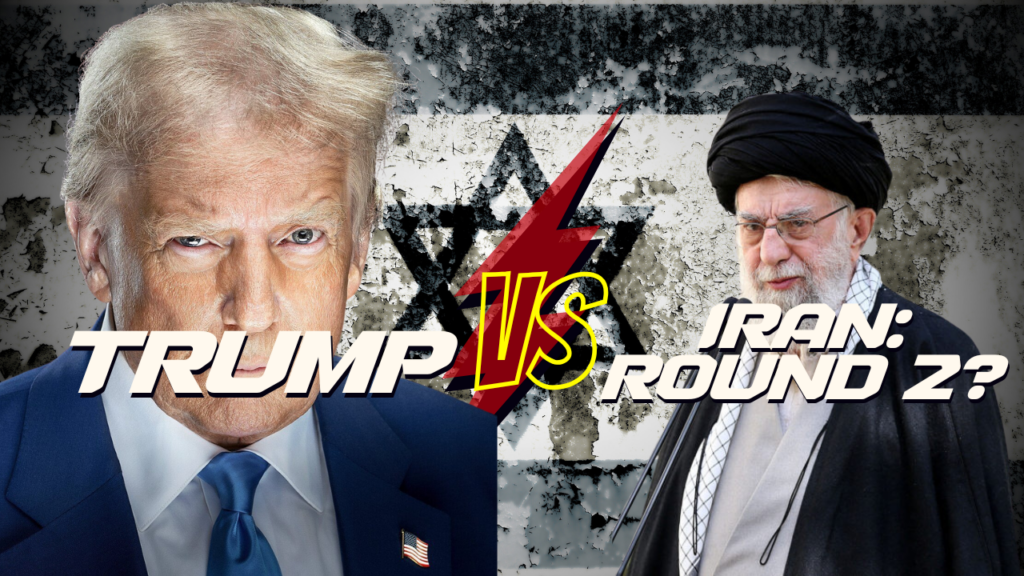
As of Wednesday, tensions between Iran and Israel are intensifying, drawing global attention to a potentially explosive situation. Just a day earlier, the International Atomic Energy Agency (IAEA) confirmed that Iran has enriched uranium to near-weapons-grade levels—enough, by some estimates, to produce up to nine nuclear bombs. According to a recent Reuters report, Iran now possesses over 400 kg of uranium enriched to 60%, which—if further refined—could fuel multiple nuclear weapons.
That news came in the wake of Israeli airstrikes on Iranian targets, an aggressive move following claims from Iran’s Revolutionary Guard Corps that they had used hypersonic missiles in an earlier strike against Israel. Tehran’s leaders have since vowed retaliation. Adding to the uncertainty, the U.S. has temporarily closed its embassy in Jerusalem through Friday, fueling speculation about possible American involvement behind the scenes.
In the middle of this fast-moving crisis, historian Victor Davis Hanson posted a detailed thread on X analyzing how former President Donald Trump’s foreign policy might apply in the current moment. According to Hanson, Trump’s strategy has never fit neatly into either “isolationist” or “interventionist” boxes. Instead, he describes it as pragmatic and rooted in a populist-nationalist mindset that asks: What’s best for America?—both in cost and consequence.
Misunderstanding Trump?
Many are now demanding that Trump act abroad in the way they think he had promised and campaigned–which can be mostly defined as how closely he should parallel their own version of MAGA.
But Trump’s past shows that he never claimed that he was either an…
— Victor Davis Hanson (@VDHanson) June 18, 2025
Hanson points to Trump’s first term (2017–2021) as proof of this approach in action. He cites Trump’s bold decisions to take out ISIS leader Abu Bakr al-Baghdadi and Iranian general Qasem Soleimani, as well as U.S. military strikes on Russia’s Wagner Group in Syria. Trump showed he wasn’t afraid to act forcefully when American interests were on the line. His tough talk on North Korea’s “little rocket man” and his strong warnings to Russia—which some argue deterred Putin from invading Ukraine during those years—are more examples of Trump using deterrence, not disengagement.
Hanson even compares Trump’s philosophy to historical figures like Andrew Jackson and Lucius Sulla—leaders known for the motto: “No better friend, no worse enemy.”
According to Hanson, a key piece of Trump’s style is what he calls transactional diplomacy—a focus on outcomes over optics. For example, while Trump kept lines of communication open with Putin, he avoided the kind of public insults that could shut down negotiations. Hanson likens this to Winston Churchill’s delicate balancing act with Stalin during World War II—engaging when needed to serve larger goals. And notably, under Trump’s administration, Russia didn’t invade Ukraine—a point often raised by his supporters.
Looking at Iran, Trump’s stance has been loud and clear for over two decades that they cannot have nuclear weapons. That message hasn’t changed. Earlier today, President Trump was asked by reporters about endless wars and concerns about the MAGA base. Trump responded making it clear, “We are NOT looking for a long-term war.” I only want one thing. Iran cannot have a nuclear weapon – that’s it. I’m not looking long-term, short-term. I’ve been saying it for 20 years.”
🚨 BREAKING: President Trump just reassured the MAGA base – “we are NOT looking for a long-term war.”
“I only want one thing. Iran cannot have a nuclear weapon – that’s it. I’m not looking long-term, short-term. I’ve been saying it for 20 years.” pic.twitter.com/Alh2ReZ2r6
— Eric Daugherty (@EricLDaugh) June 18, 2025
This consistency lines up with Hanson’s assessment that Trump would support Israel’s right to take action against Iran’s nuclear ambitions, possibly with U.S. support behind the scenes—but with a clear eye on the risks involved. The preferred approach? Let Israel lead the charge while the U.S. provides strategic, diplomatic, or logistical backing. It’s a concept known in policy circles as “offshore balancing”—supporting regional allies without getting stuck in another drawn-out Middle Eastern war.
That said, Hanson doesn’t rule out U.S. military action under Trump. But it would come as a last resort—only if diplomacy failed and the threat outweighed the cost, whether in terms of energy markets, global stability, or American lives.
Trump’s foreign policy often blends firm warnings with unexpected gestures—part deterrent, part wild card. That unpredictability, Hanson argues, keeps adversaries guessing and gives Trump leverage. Whether you view it as savvy or risky, it’s a calculated approach built around flexibility and results.
As the Iran-Israel situation continues to unfold—with airstrikes, nuclear alarms, and diplomatic uncertainty—Trump’s past and potential responses remain a hot topic. One thing’s sure: the stakes couldn’t be higher, and the world is watching.