Contributor News
House Passes SAVE Act, Heads To Senate Next. Will Biden Veto?

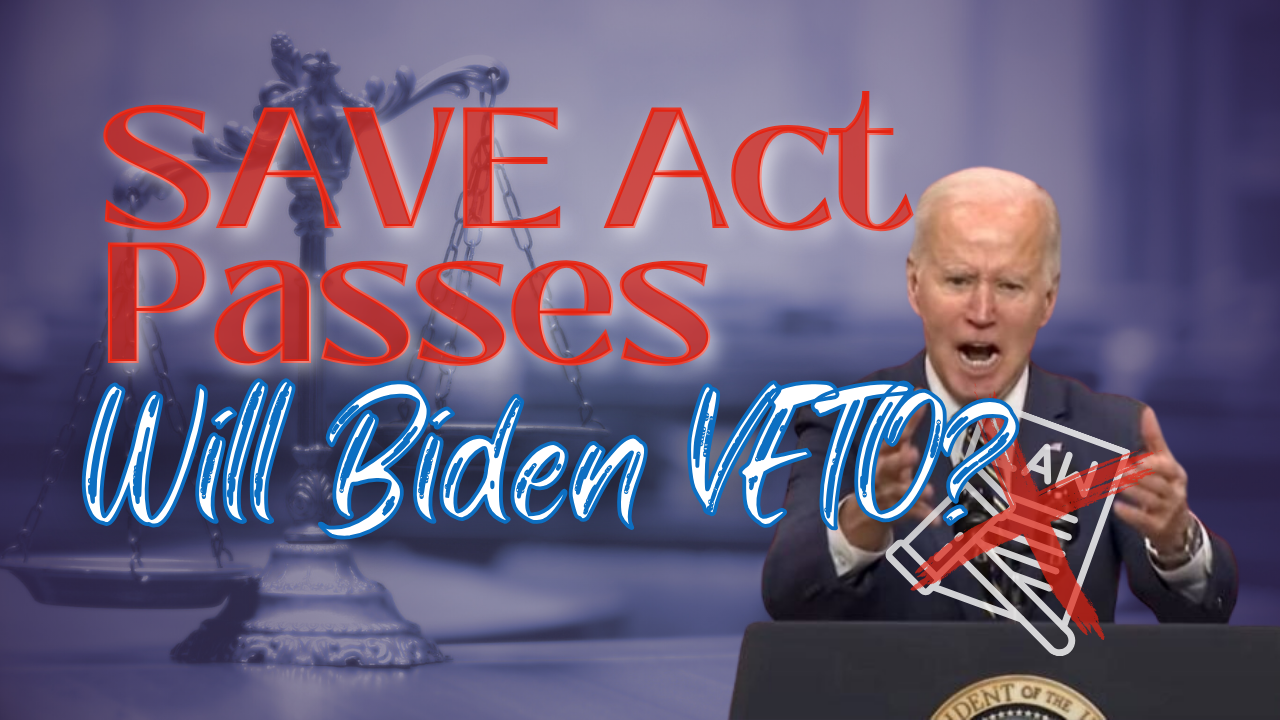
The SAVE Act, also known as the Safeguard American Voter Eligibility Act, passed today in the House of Representatives. This act’s primary goal is to ensure that only legal U.S. citizens may vote in federal elections. This is achieved by requiring proof of citizenship when registering to vote.
Senator Mike Lee (R-Utah) and Congressman Chip Roy (R-Texas) introduced the bill in May 2024. Today, while all House Republicans voted in favor, every Democrat voted against it.
Democrats opposed the bill mainly because they believed it was unnecessary and could potentially disenfranchise eligible voters. They argue that current laws already effectively prevent non-citizens from voting in federal elections. Democrats also believe that the bill could make it harder for certain groups, such as naturalized citizens and people of color, to register to vote.
The Pew Research Center recently polled Americans to determine their views on proof of ID to vote. Not surprisingly, the poll shows that a high percentage favor such.

Leading up to today’s vote, however, issues have arisen from non-citizens alleging they were unknowingly registered to vote.
BREAKING: Countless reddit users are reporting that they have been registered to vote as non-citizens. Many say it was automatic, and some say it was by accident. Either way, non-citizens ARE VOTING in our elections
Many say they voted in 2020 and only discovered they weren’t… pic.twitter.com/axzO0YMFR6
— George (@BehizyTweets) July 8, 2024
Additionally, a video was released just last week showing non-citizens in North Caroline admitting they are registered to vote.
Watch:
🚨 BREAKING: NONCITIZENS ADMIT TO BEING REGISTERED TO VOTE🚨
Footage from @realmuckraker shows non-citizens admitting they are registered to vote
A staggering 10% of the people surveyed admitted to this
If this percentage holds, the 2024 election is in jeopardy pic.twitter.com/j8ux3ydwsH
— Oversight Project (@OversightPR) July 4, 2024
Another issue raised across social media platforms is regarding ballot harvesting by the Democrat party, a point addressed during a recent Joe Rogan podcast.
They are not “importing democrat voters.” They are importing people, names, that allows the state fraud process to generate ballots.
This is an important distinction.
The migrants will not use the ballots. The DNC harvesters will collect them, fill them out (Obama), then the… https://t.co/bHDAovg6BA
— TheLastRefuge (@TheLastRefuge2) July 9, 2024
This November 2024, voters in seven states will decide on ballot measures to prohibit noncitizens from voting. These measures, supported by Republican-controlled legislatures, seek to amend state constitutions to specify that only citizens can vote in state elections. Federal law prohibits noncitizens from voting in federal elections but leaves state and local election rules up to individual states.
Across the United States, most state constitutions mention citizenship as a requirement for voting, but only seven explicitly state that noncitizens cannot vote. North Dakota was the first to make this change in 2018, followed by Colorado, Alabama, Florida, Ohio, and Louisiana in subsequent years.
As of 2024, some areas like the District of Columbia and specifically California, Maryland, and Vermont municipalities allow noncitizens to vote in local elections, indicating a varied landscape of voting rights across the country.
Republicans believe that the SAVE Act is necessary to protect the integrity of federal elections. They argue that the bill will ensure that only U.S. citizens can vote in federal elections, which is a fundamental right of citizenship. Republicans also believe the bill will prevent voter fraud and uphold the principle of one person, one vote.
The bill will now head to the Senate, where it is expected to face opposition from Democrats. If it passes the Senate, it would then need to be signed by the President to become law.
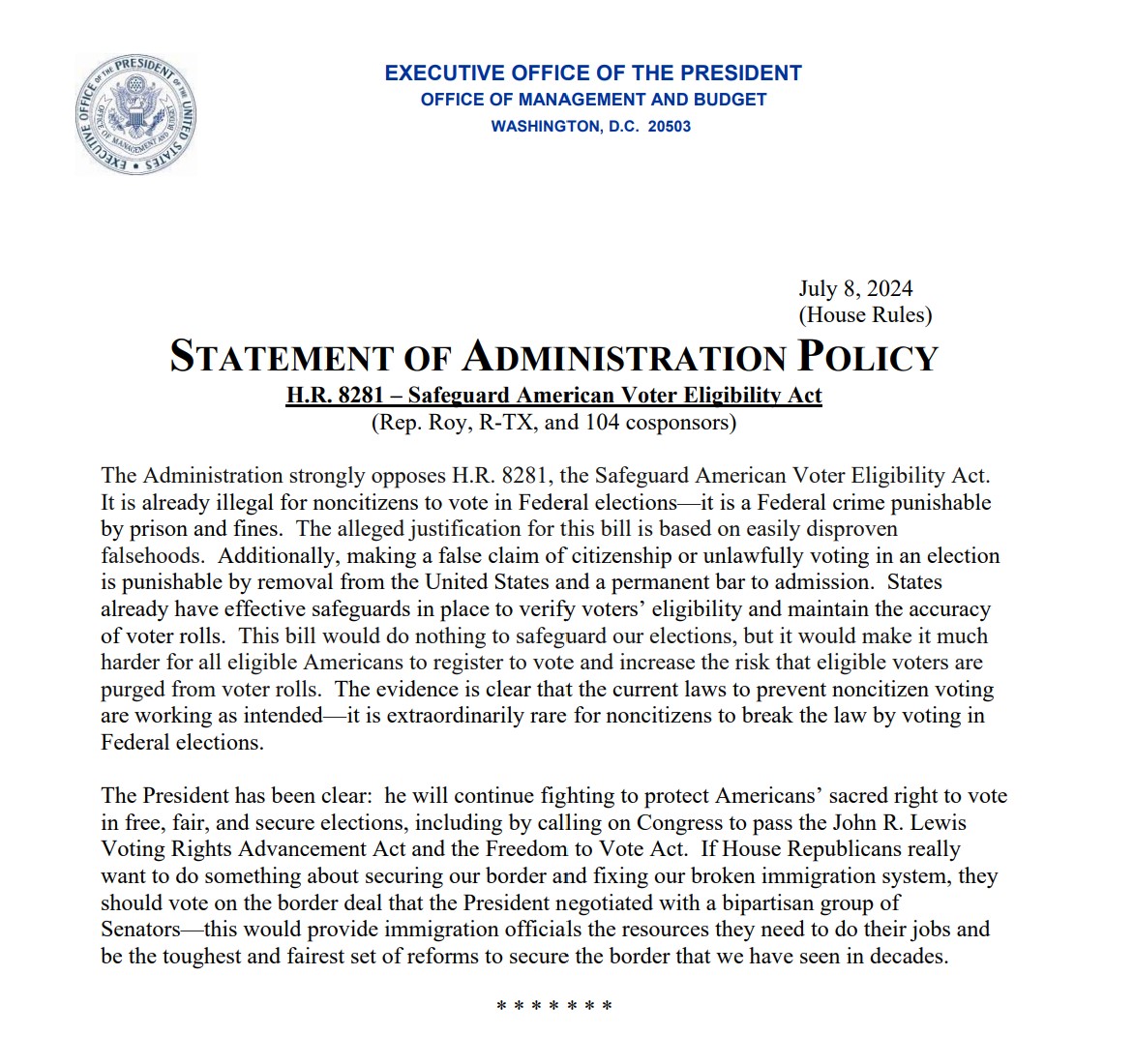
The Biden Administration released a statement on Monday, voicing the President’s opposition to the SAVE Act while also saying “he will continue fighting to protect Americans’ sacred right to vote in free, fair, and secure elections…”
Biden’s stance on the SAVE Act is critical to the ongoing discussion. He opposes this bill requiring proof of citizenship to register to vote in federal elections, a position that has significant implications for the future of the legislation.