
Contributor News
Can the State Override Parents? SCOTUS Tackles LGBTQ Books for 3-Year-Olds

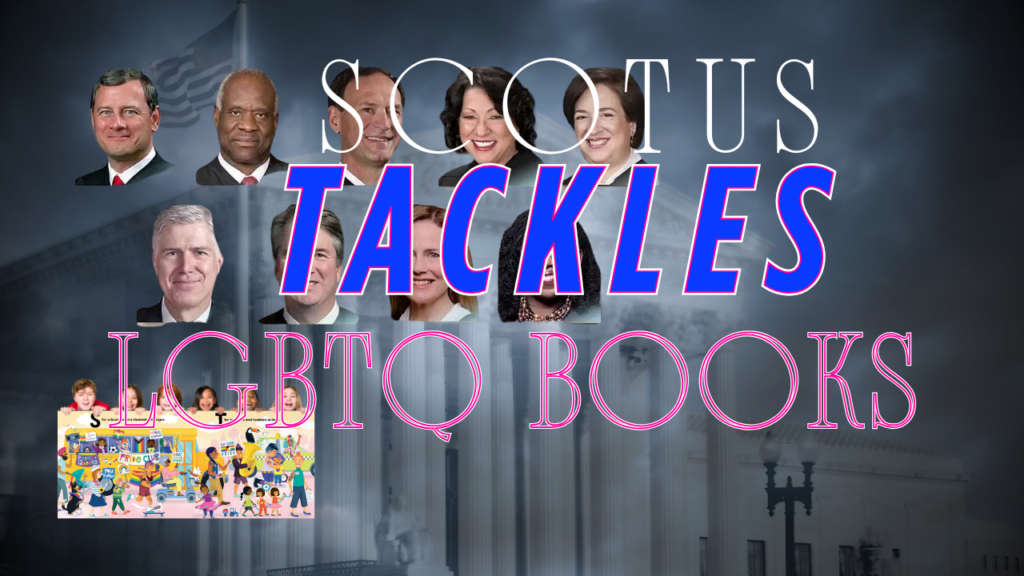
The U.S. Supreme Court heard arguments this week for a case that is quickly gaining national attention. Mahmoud v. Taylor is a legal case over including LGBTQ-themed storybooks in Montgomery County, Maryland’s public school curriculum. The case, which pits parental religious rights against public education policies, took a striking turn when the school district’s attorney admitted during oral arguments that the curriculum was designed to “influence” children as young as three years old, raising questions about the appropriateness of such content and its alignment with constitutional protections.
Origins of the Dispute
The controversy began in October 2022 when the Montgomery County Public Schools (MCPS), serving over 160,000 students in Maryland’s largest school district, introduced a set of LGBTQ-inclusive storybooks into its K-5 English Language Arts curriculum. Books like Pride Puppy, used for pre-kindergarten and kindergarten students, and Prince and Knight, for older elementary children, were intended to reflect the diversity of the county’s families. Pride Puppy, for instance, features a rhyming A-to-Z story about a puppy lost at a Pride parade, with terms like “drag queen” and “leather jacket” woven into a scavenger hunt activity for young readers.
For years, MCPS had allowed parents to opt their children out of certain lessons if they conflicted with religious beliefs, a policy consistent with Maryland state laws that permitted exemptions for topics like health education involving gender and sexuality. Initially, parents were notified in advance and could opt out of lessons involving these storybooks. However, in March 2023, the school board reversed this policy, citing new Maryland rules on “educational equity.” The board mandated that the books be integrated into the general curriculum without opt-outs or advance notice, arguing that the stories were part of English Language Arts—focusing on universal themes like emotions and self-expression—rather than health or sex education.
The Legal Battle Begins
This policy shift prompted a lawsuit in May 2023 from three families with religious objections to the curriculum. The parents, whose beliefs conflicted with the themes of gender identity and sexuality presented in the books, argued that the school district’s refusal to allow opt-outs violated their First Amendment right to freely exercise their religion. They pointed to specific content—like a line in Love Violet where a character’s heart skips a beat for another girl, or the inclusion of “drag queen” in Pride Puppy—as introducing ideas contradicting their values. The families did not seek to ban the books but requested the reinstatement of the opt-out option, asserting that the policy burdened their ability to guide their children’s moral and religious upbringing.
The case, Mahmoud v. Taylor, progressed through federal district court and likely the Fourth Circuit, though specific lower court outcomes are not fully detailed in available records. The district court noted that the school district intended to “influence” students through exposure to these books, a finding that would later become a focal point in the Supreme Court hearing. The parents appealed to the Supreme Court, which agreed to hear the case on January 17, 2025, marking Montgomery County Public Schools’ first appearance before the Court in 20 years.
Supreme Court Hearing: A Pivotal Admission
The Supreme Court heard oral arguments on Tuesday, addressing the central question: does the school district’s policy of mandating participation in lessons involving LGBTQ-themed storybooks, without an opt-out option, unconstitutionally burden parents’ First Amendment right to freely exercise their religion? The hearing quickly gained attention due to a revealing exchange between Justice Neil Gorsuch and Alan Schoenfeld, the Montgomery County school district attorney.
Justice Gorsuch questioned Schoenfeld about Pride Puppy, a book previously used in the pre-kindergarten curriculum, which included a scavenger hunt for terms like “drag queen” and “leather jacket.” Gorsuch pressed Schoenfeld on the book’s placement in the English curriculum rather than a human sexuality class, asking, “And you’ve included these in the English language curriculum rather than the human sexuality curriculum to influence students, is that fair? That’s what the district court found. Do you agree with that?”
Schoenfeld’s response was striking. He acknowledged, “I think, to the extent the district court found that it was to influence, it was to influence them towards civility, the natural consequence of being exposed to—” before being interrupted by Gorsuch, who interjected, “Whatever, but to influence them.” Schoenfeld conceded, “In the manner that I just mentioned, yes.” This admission confirmed that the school district’s goal was indeed to influence children as young as three years old through exposure to concepts of gender identity and sexuality, albeit framed as promoting “civility.”
In 2025, an attorney for a government school district is able to make it all the way to the U.S. Supreme Court defending exposing children as young as three years old to books about sexuality. Imagine going back in time to any point—even just a few years ago—and explaining that… pic.twitter.com/mMA3ZslRvs
— Laura Powell (@LauraPowellEsq) April 23, 2025
The exchange highlighted a core tension in the case: the school district’s intent to shape young students’ perspectives on sensitive topics, even within a general curriculum, versus the parents’ right to shield their children from such content when it conflicts with their religious beliefs. Schoenfeld’s acknowledgment that the curriculum aimed to influence students sexually—by introducing concepts like drag queens and leather attire in a context that could be interpreted as normalizing specific sexual identities or expressions—intensified the debate over age-appropriateness and parental control.
Broader Implications
The school district defended its policy by arguing that the books were not about sex education but were age-appropriate stories meant to foster inclusivity and reflect the community’s diversity. They claimed that allowing opt-outs would be logistically challenging and could undermine the curriculum’s goals, potentially leading to the books’ removal altogether. However, the parents’ legal team countered that the policy forced their children to engage with ideas that contradicted their faith, without providing a reasonable accommodation like an opt-out, thus violating their constitutional rights.
The Supreme Court’s hearing revealed broader tensions between public education’s role in promoting inclusivity and parents’ rights to control their children’s exposure to certain ideas. Justice Brett Kavanaugh, a Montgomery County resident, emphasized the area’s historical commitment to religious liberty, questioning the school board’s firm stance against opt-outs. While the Court’s final ruling is not yet available, the hearing underscored the significant constitutional questions at stake, particularly in light of Schoenfeld’s admission about the curriculum’s intent.
Conclusion
The Mahmoud v. Taylor case has brought to the forefront a critical debate over the balance between educational goals and religious freedoms in public schools. The Montgomery County school district’s decision to mandate participation in a curriculum featuring LGBTQ-themed storybooks, coupled with its attorney’s admission during Supreme Court arguments that the intent was to influence young children sexually, has intensified scrutiny of the policy’s alignment with constitutional protections. A decision is estimated to be issued by late June toward the end of the 2024-2025 term. The hearing’s timing in the latter part of this month allows the justices approximately two months to deliberate and finalize their opinions, aligning with the Court’s typical schedule for releasing decisions before the summer recess.
As the nation awaits the Court’s decision, the case serves as a pivotal moment in defining parental rights and public education boundaries.