
Contributor News
Boasberg’s FISA Past Comes Back To Haunt Him In Trump’s Deportation Fight

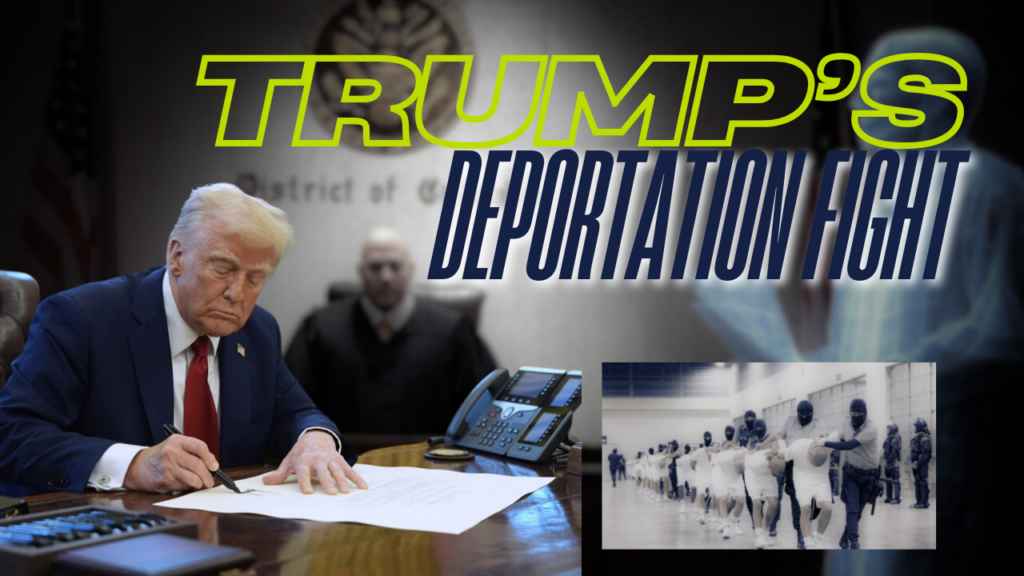
A legal and political firestorm continues to grow over U.S. District Judge James E. Boasberg. His rulings blocking President Donald Trump’s deportations of Tren de Aragua (TdA) members to El Salvador continue to collide with accusations of judicial overreach, a controversial FISA court history, and Trump’s demand for impeachment. Chief Justice John Roberts also weighed in, defending judicial independence, while Attorney General Pamela Bondi denounced Boasberg of endangering national security. New developments came to light on Wednesday alleging Boasberg responded to the Department of Justice’s (DOJ) motion, intensifying the Trump deportation crisis and reigniting debates over his past role in targeting Trump associates via FISA warrant applications.
Boasberg’s Background: A Controversial Judicial Career
James Emanuel “Jeb” Boasberg, born February 20, 1963, in San Francisco, California, graduated from Yale University and Yale Law School. Appointed by President George W. Bush, he served on the Superior Court of the District of Columbia from 2002 to 2011. President Obama nominated him in 2011 to the U.S. District Court for the District of Columbia, where he became Chief Judge in 2023.
FISA Court Controversy and Trump Ties
Boasberg’s most polarizing role began in 2014, when Chief Justice John G. Roberts appointed him to the United States Foreign Intelligence Surveillance Court (FISC) for a term starting May 18, 2014, replacing Judge Reggie Walton. He served as Presiding Judge from January 2020 to May 2021. This appointment has drawn fierce criticism from conservatives, who allege Boasberg’s FISA court decisions enabled surveillance abuses against Trump campaign associates in 2016.
- FISA Warrant Applications: X users like @billysandytodd and web reports (e.g., The Conservative Treehouse, RedState) say Boasberg signed warrants to “illegally spy” on Trump associates, including Gen. Michael Flynn, Donald Trump, Rudy Giuliani, and George Papadopoulos. As part of the FBI’s Crossfire Hurricane investigation, these warrants relied on the controversial Steele Dossier. They were later criticized for containing errors and omissions, as detailed in the Department of Justice Inspector General Michael E. Horowitz’s report.
- Kevin Clinesmith Case: In 2020, Boasberg presided over the sentencing of FBI lawyer Kevin Clinesmith, who altered an email used in a FISA application against Trump advisor Carter Page. Boasberg sentenced Clinesmith to probation instead of prison, a decision conservatives labeled as lenient, fueling accusations of bias against Trump.
- Public Outcry: The X post suggests filing bar association complaints against Boasberg and Roberts for civil rights violations tied to these FISA actions, framing it as a pattern of judicial activism against Trump.
Current Crisis: TdA Deportations and Judicial Overreach
Last Saturday, March 15, 2025, President Trump invoked the 1798 Alien Enemies Act to deport approximately 300 alleged TdA members—linked to over 100 murders, human trafficking, and drug trafficking in the U.S.—to El Salvador, declaring a national immigration emergency. The American Civil Liberties Union (ACLU) challenged the deportations, prompting Boasberg to issue a temporary restraining order (TRO) late that day, blocking the flights and ordering one already airborne to return.
- Boasberg’s Actions (March 15–18, 2025): During a March 17 hearing, Boasberg demanded the Trump administration explain why it ignored his TRO, questioning whether deportations proceeded despite his order. He expressed skepticism over the Department of Justice’s (DOJ) claim that his ruling didn’t apply to flights in international airspace.
- Attorney General Pamela Bondi’s Response (March 18, 2025): Bondi condemned Boasberg’s ruling as “supporting TdA terrorists over American safety,” arguing it disregards Trump’s executive power under the Alien Enemies Act and endangers national security. She vowed to continue deportations, framing Boasberg’s intervention as judicial overreach.
- Boasberg’s Stance: Today, Boasberg appears to have responded to the DOJ’s motion filed that morning, requesting a hold on his demand for details on TdA deportation flights. According to journalist Julie Kelly @julie_kelly2, Boasberg replied by pondering why the DOJ raised the state secrets privilege defense now and delayed his demand by one day. This suggests that Boasberg maintains his oversight, questions the DOJ’s legal strategy, and continues to assert judicial authority over the Trump administration’s actions.
Trump’s Impeachment Call and Roberts’ Rebuke
President Trump posted on Truth Social, demanding Boasberg’s impeachment, calling him a “Crooked Judge” for interfering with TdA deportations. Trump argued Boasberg overstepped his authority, stating, “That’s a presidential job, not for a local judge to be making that determination.”
- Roberts’ Response (March 18, 2025): Chief Justice John Roberts issued a rare public statement, reported by CNBC, Reuters, and AP News, defending judicial independence. He stated, “For more than two centuries, it has been established that impeachment is not an appropriate response to disagreement concerning a judicial decision.” Roberts’ rebuke addressed Trump’s broader criticism of Boasberg but did not comment directly on Boasberg’s latest actions or Bondi’s statement as of today.
Public Reaction and X User Suggestions
On X, conservatives like @billysandytodd and @nicksortor have amplified calls for Boasberg’s impeachment, linking his FISA court history to his current rulings as evidence of bias against Trump. In the thread following journalist Julie Kelly’s post, X user @tizintest commented, “Listen to was Alan Dershowitz said. This whole issue can be done away with in two weeks. Congress can limit the authority of district judges to their jurisdiction. Why aren’t they doing that?” Their suggestion reflects growing frustration among some X users with Boasberg’s rulings, urging legislative action to curb perceived judicial overreach in the Trump deportation crisis.
House Republicans, including Rep. Jim Jordan (R-OH), are reportedly exploring an impeachment investigation, citing Boasberg’s actions as undermining presidential authority. Critics argue his FISA role and TdA rulings form a pattern of judicial activism, while supporters, including legal scholars, defend his adherence to due process.
What’s Next in the Trump Deportation Crisis
The Trump administration is appealing to the U.S. Court of Appeals for the D.C. Circuit to remove Boasberg from the case, arguing bias and overreach. Boasberg’s March 19 response, delaying his demand by one day while questioning the DOJ’s state secrets privilege defense, suggests the legal battle will intensify. Legal experts predict a potential Supreme Court case could determine the balance between executive power under the Alien Enemies Act and judicial oversight in immigration emergencies. For now, the clash between Boasberg, Trump, Bondi, and X users underscores a pivotal moment in America’s national security debate.