
Contributor News
Boasberg Awaits: Will GOP Holdouts Jeopardize Trump’s DOJ Agenda?

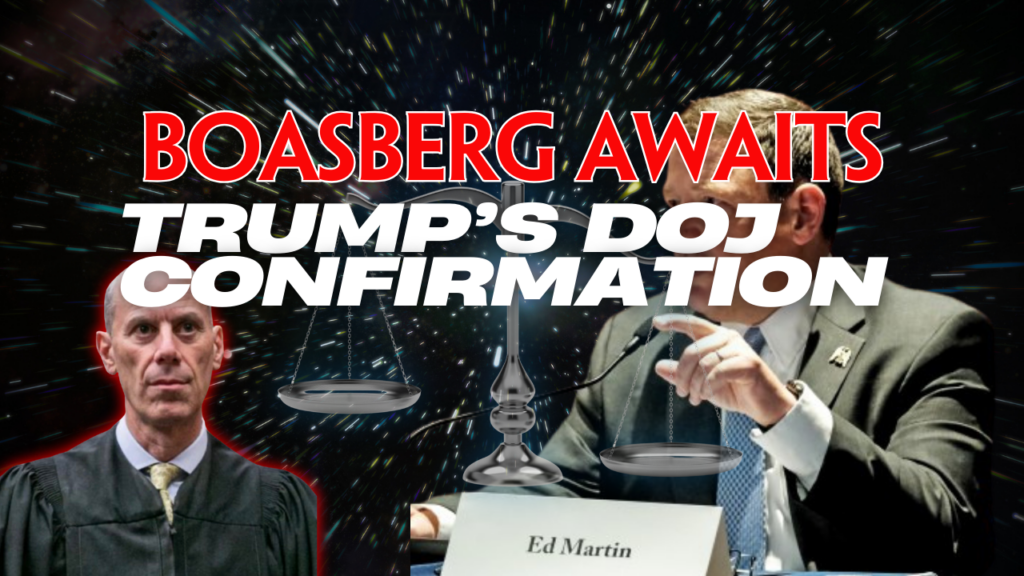
The nomination of Ed Martin as U.S. Attorney for the District of Columbia, a pivotal role in President Donald Trump’s second-term agenda, is facing significant resistance from Republican senators, threatening to derail Trump’s momentum. The stakes are high with a looming May 20, 2025, deadline for Senate confirmation. If Martin isn’t confirmed, Chief Judge James Boasberg could appoint an interim prosecutor, a scenario that Trump supporters believe could paralyze the administration’s goals. The opposition, led by Senator Thom Tillis (R-North Carolina) and marked by hesitation from other GOP senators, underscores deep divisions within the Republican Party over Martin’s views on the January 6, 2021, Capitol riot and his alignment with Trump’s “drain the swamp” mission.
Republican Resistance to Ed Martin’s Nomination
Senator Thom Tillis has emerged as the most vocal opponent of Martin’s nomination within the Republican ranks. Tillis, who faces reelection in 2026, has publicly stated his opposition, citing Martin’s support for January 6 rioters who assaulted police as a primary concern. “Most of the friction was over the senator’s view that anyone who entered the Capitol during the riot deserved at least some jail time for making ‘the stupid decision to come through a building that had been breached,’” Tillis told reporters, according to The Washington Post. While Martin allegedly agreed with Tillis that hundreds of rioters should not have been pardoned by Trump, Tillis remains unconvinced, arguing that those who entered the Capitol disgraced the United States by “absolutely destroying” it.
Tillis’s opposition is particularly significant because he serves on the Senate Judiciary Committee, which must approve Martin’s nomination before it reaches the full Senate. The committee, chaired by Senator Chuck Grassley (R-Iowa), consists of 12 Republicans, and Martin cannot afford to lose more than one Republican vote to advance. However, Tillis isn’t the only source of resistance. Signs of trouble have emerged from other GOP senators on the committee, indicating broader skepticism about Martin’s qualifications and past statements.
While not on the Judiciary Committee, Senator Lisa Murkowski (R-Alaska) has expressed reservations about Martin. She highlighted her disagreement with Martin’s support for Trump’s blanket pardons of nearly 1,600 January 6 defendants and noted his active role in 2020 election denial efforts. Murkowski, who faced Martin’s criticism for voting to convict Trump during his second impeachment trial, told The Washington Post that she would consider meeting with Martin if his nomination reached the Senate floor. However, her comments suggest potential opposition. “If his nomination seems to be moving forward, and it was clear that I was going to be in a position where I would have to vote on the floor, I’d have a meeting,” she said.
Other Judiciary Committee Republicans have been notably reserved. Senator John Neely Kennedy (R-Louisiana) stated, “I’m just starting to read about him.” At the same time, Senator Ted Cruz (R-Texas) directed questions to his press office. Senator John Cornyn (R-Texas), whom Martin once criticized as “a guy that sort of goes soft” for supporting bipartisan gun-control legislation, declined to commit to supporting Martin, saying, “We’ll cross that bridge when we come to it.” These lukewarm responses, combined with the committee’s decision not to list Martin on its agenda for a vote this week, signal that Martin lacks the unanimous Republican support needed to move forward.
Senator Josh Hawley (R-Missouri), a Judiciary Committee member, has defended Martin, arguing that his nomination’s fate hinges on Trump’s ability to sway Tillis. “The president has a lot of influence; if he really wants someone, he might be able to get Senator Tillis to change his mind,” Hawley said. Grassley, meanwhile, has not declared Martin’s nomination dead, stating, “I wouldn’t say it’s over until it’s over.” However, Grassley acknowledged Martin’s intense scrutiny, noting that senators submitted 500 written questions about his nomination, far more than typical for such a role.
Charlie Kirk shared his response why he believes Rep. Tillis’s resistance is a terrible argument:
BREAKING: Sen. Tom Tillis informs the White House he is opposing President Trump’s pick for U.S. Attorney for D.C. Ed Martin.
“Most of my concerns related to January 6th.”
“I’ve indicated to the White House I wouldn’t support his nomination.”
Tillis’ logic is absurd. He… pic.twitter.com/eLdFtPB8cc
— Charlie Kirk (@charliekirk11) May 6, 2025
Why the DC U.S. Attorney Role Is Crucial
The U.S. Attorney for the District of Columbia holds a uniquely powerful position, making Martin’s nomination a linchpin for Trump’s second-term agenda. Cybersecurity expert Mike Benz stated on X, “The prosecutor is on top of the FBI. He runs all DC criminal investigations. He is the choke point for DC’s worst secrets.” Unlike other U.S. Attorneys, the DC U.S. Attorney oversees federal and local prosecutions in the nation’s capital, giving the office immense influence over investigations involving federal agencies, high-profile political figures, and sensitive cases tied to national security or political corruption.
For Trump and his allies, Martin’s appointment is critical to advancing the goal of combating “deep state” corruption. Mike Benz warned that if Martin is blocked, “Trump 2.0’s momentum is totally paralyzed,” a sentiment echoed by other X users.
The DC U.S. Attorney’s office has a history of handling high-profile cases intersecting national politics. During Trump’s first term, interim U.S. Attorney Michael R. Sherwin was in office during the January 6 Capitol riot, overseeing initial prosecutions that became a flashpoint for political debate. Martin’s views on January 6—he has opposed the prosecution of many rioters and supported Trump’s pardons—could shift the office’s priorities, potentially reopening or dismissing cases that Trump’s base views as politically motivated. This makes the role a battleground for Trump’s broader “law-and-order” agenda, particularly in a jurisdiction that includes the heart of the federal government.
Trump himself has emphasized the importance of Martin’s confirmation, posting on Truth Social, “According to many but, in particular, Robert F. Kennedy Jr., his approval is IMPERATIVE in terms of doing all that has to be done to SAVE LIVES and to, MAKE AMERICA HEALTHY AGAIN.” Trump added, “If approved, HE WILL NOT LET YOU DOWN.” For Trump supporters, Martin’s nomination is not just about one position—it’s a symbol of the administration’s ability to enact its vision after securing 77 million votes and Republican control of Congress.
Concerns About Judge James Boasberg’s Potential Role
If the Senate fails to confirm Martin by May 20, 2025, Chief Judge James Boasberg of the DC federal district court would have the authority to appoint an interim U.S. Attorney, a prospect that alarms Trump supporters. Boasberg’s judicial history, particularly his rulings against Trump’s administration, has fueled concerns that he might appoint a prosecutor hostile to Trump’s goals, potentially derailing the president’s agenda.
Boasberg has a growing track record of challenging Trump’s executive actions. In 2023, he ordered former Vice President Mike Pence to testify before a grand jury about Trump’s efforts to overturn the 2020 election, a decision that contributed to a criminal case against Trump (later dismissed). More recently, on March 15, 2025, Boasberg issued a temporary restraining order blocking Trump’s use of a 1789 wartime powers law to deport alleged Venezuelan gang members to El Salvador. When deportation flights proceeded despite his order, Boasberg accused the Trump administration of “willful disregard” and threatened to hold it in contempt, prompting Trump to call for his impeachment on Truth Social, labeling him a “troublemaker and agitator.”
These actions have cemented Boasberg’s image as an anti-Trump judge, leading to concerns that an interim U.S. Attorney appointed by him would obstruct Trump’s priorities. Benz’s warning on X highlights the stakes: if Boasberg picks the prosecutor, “Trump 2.0’s momentum is totally paralyzed.”
People are not appreciating the magnitude of the Ed Martin situation. The prosecutor is on top of the FBI. He runs all DC criminal investigations. He is the choke point for DC’s worst secrets. If Ed Martin is blocked, and Boasberg picks, Trump 2.0’s momentum is totally paralyzed.
— Mike Benz (@MikeBenzCyber) May 6, 2025
Boasberg’s history of handling politically charged cases—such as those involving Hillary Clinton’s emails and Trump’s election challenges—further fuels suspicions that his choice might prioritize maintaining the status quo over advancing Trump’s agenda.
A Critical Moment for Trump’s Agenda
Ed Martin’s nomination has become a flashpoint in the ongoing struggle between Trump’s vision and the Republican establishment. The resistance from Tillis and the hesitation from other GOP senators on the Judiciary Committee reflect broader tensions within the party over Trump’s leadership and priorities. With the May 20 deadline approaching, Trump faces a choice: rally enough Republican support to confirm Martin, or consider a recess appointment to bypass the Senate, as some supporters have urged.
The outcome of this nomination will have far-reaching implications. If Martin is confirmed, he could reshape the DC U.S. Attorney’s office to align with Trump’s goals, potentially initiating investigations into political corruption and revisiting January 6 cases. If he is blocked, and Boasberg appoints an interim prosecutor, Trump’s ability to enact his agenda in Washington could face significant obstacles, testing the administration’s influence at a critical juncture. As Grassley noted, “It’s not over until it’s over,” but Martin’s nomination remains a precarious battleground for the future of Trump 2.0.