Contributor News
Birthright Citizenship Debate Gets Heated at Supreme Court—Then Comes the Head-Scratcher

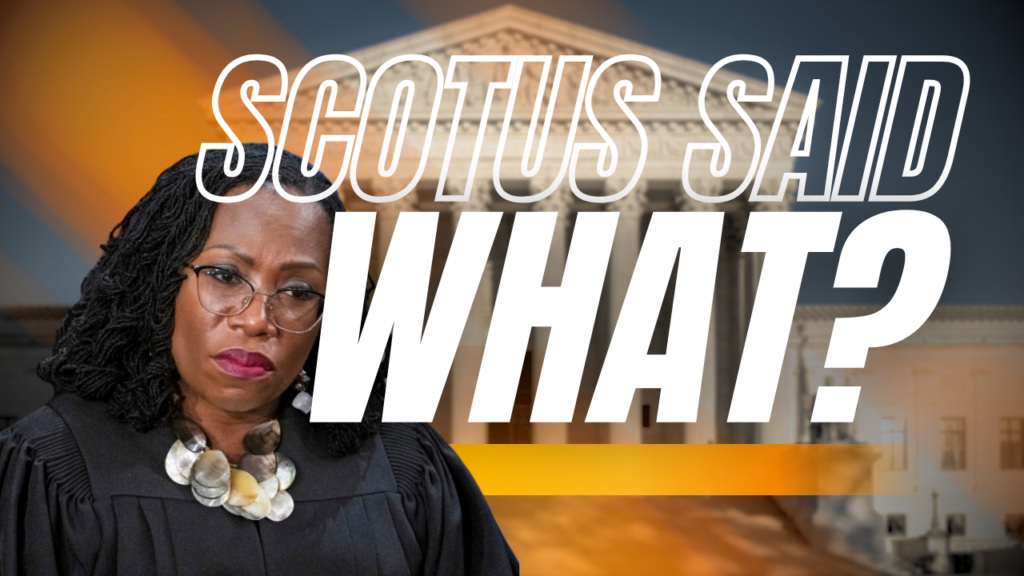
In a historic session that could reshape the future of American citizenship, the U.S. Supreme Court on Wednesday heard oral arguments in Trump v. Barbara. The case is a high-stakes challenge to President Donald Trump’s executive order limiting automatic birthright citizenship under the 14th Amendment. At issue: whether children born on U.S. soil to illegal immigrants, temporary visa holders, or foreign nationals who do not owe full allegiance to America should automatically become citizens – a policy critics have long called an open invitation to “anchor babies,” birth tourism, and exploitation of our nation’s generosity.
Arguments over the 14th Amendment’s Citizenship Clause – “All persons born or naturalized in the United States, and subject to the jurisdiction thereof” – were never intended to hand out citizenship like candy to the children of lawbreakers or foreign agents. The amendment, which was ratified after the Civil War to secure rights for freed slaves, regarding the “subject to the jurisdiction” language, demands complete allegiance, not mere physical presence.
Illegal entrants and tourists aren’t fully subject to U.S. jurisdiction in the same way; they remain tied to their home countries’ laws, passports, and obligations. Giving their children automatic citizenship rewards illegal entry, burdens taxpayers with welfare and education costs, fuels chain migration, and poses serious national security risks – from Chinese birth tourism, to potential “sleeper” agents from adversarial nations.
Justice Samuel Alito argued forcefully from a constitutional perspective. He invoked the late Justice Antonin Scalia’s wisdom to drive home a core point: just because illegal immigration on today’s massive scale wasn’t a problem in 1868 doesn’t mean the 14th Amendment’s plain text can’t address it. Using Scalia’s microwave oven analogy, Alito explained that a general rule (like an old theft statute) applies to new realities. “What we’re dealing with here is something that was basically unknown at the time when the 14th Amendment was adopted, which is illegal immigration,” Alito stated.
While emphasizing the dangers of dual allegiance, he noted that a child born here to an illegal Iranian entrant would still owe military service to Iran, a foreign power, creating divided loyalties that undermine American sovereignty. “They have the duty of military service. It seems that makes them subject to a foreign power,” Alito warned. He also criticized lax enforcement, stressing how open borders exacerbate the problem.
Alito’s sharp defense resonates with those who value secure borders, fiscal responsibility, and the rule of law – principles that protect the American family, our communities, and the God-given blessings of this exceptional nation. It can also be viewed as stewardship: honoring the rule of law that undergirds a free society while safeguarding opportunities for those who come legally and embrace our values. Others may view it as common sense – why should lawbreakers get a shortcut that dilutes citizenship for everyone else?
Other justices probed the practicalities, with questions about domicile, intent, and historical precedents like United States v. Wong Kim Ark (which involved legal residents, not illegals).
President Trump himself made history by attending the arguments in person, a first for a sitting president, underscoring the issue’s gravity to his America First agenda. But the arguments weren’t without their lighter moments – or, rather, head-scratching ones reserved for the end.
In a twist that had court watchers doing double-takes, Justice Ketanji Brown Jackson delivered what can only be described as the judicial equivalent of a comedy routine straight out of a late-night sketch show. In her attempt to justify automatic citizenship, Jackson offered this nonsensical gem: “If I steal someone’s wallet in Japan, the Japanese authorities can arrest me and prosecute me… I’m still locally owing allegiance in that sense.”
Ketanji Brown Jackson’s argument justifying birthright citizenship:
“If I steal someone’s wallet in Japan, the Japanese authorities can arrest me and prosecute me… I’m still locally owing allegiance in that sense.”
Umm… WHAT?!pic.twitter.com/XHc02sHAum— Libs of TikTok (@libsoftiktok) April 1, 2026
Picture it: America’s highest court, debating the soul of citizenship, and one justice equates “owing allegiance” to the U.S. with getting busted for petty theft abroad. It’s the kind of logic that makes you wonder if she’s still stuck on “What is a woman?” Because if mere subjection to local laws (like traffic tickets or jaywalking) equals full allegiance, then every tourist, diplomat, or invader automatically pledges their soul to Uncle Sam. If Jackson’s wallet heist in Tokyo makes her a loyal subject, we should start issuing green cards at TSA checkpoints. Genius. Or something.
Editor’s note:
While these oral arguments did indeed take place today on April 1, 2026, rest assured – this was no April Fool’s joke. The battle to secure our borders, protect our citizenship, and preserve the American dream for those who play by the rules is very real. A decision is expected this summer.
Stay tuned, America.