Contributor News
Biology Beats Ideology: Could This UK Victory Reshape U.S. Policy?
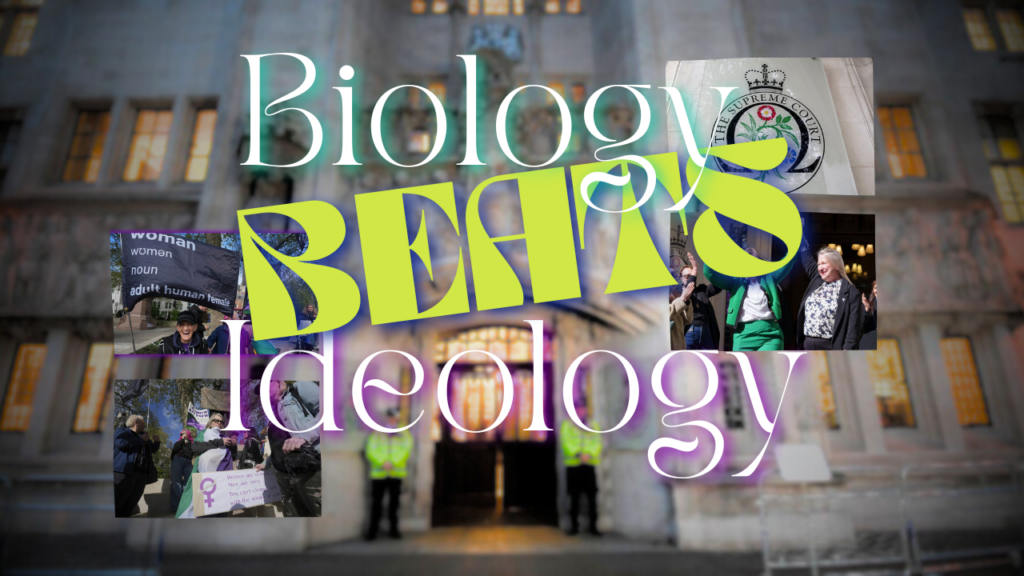

Fantastic news for women’s rights came out of the UK on Wednesday. In a unanimous decision, the UK Supreme Court has ruled that the term “woman” under the Equality Act 2010 refers to biological sex, delivering a monumental victory for women’s rights advocates.
Judgment has been given this morning in the matter of For Women Scotland Ltd (Appellant) v The Scottish Ministers (Respondent) UKSC 2024/0042: https://t.co/QGmrliNOsG pic.twitter.com/f2qlAD2JMV
— UK Supreme Court (@UKSupremeCourt) April 16, 2025
The landmark judgment clarifies that single-sex services and spaces—such as bathrooms, prisons, sports, and refuges—can legally prioritize biological females, offering a robust framework to protect women’s safety, privacy, and fairness. Hailed as a triumph of legal clarity, this ruling not only reshapes the landscape of sex-based rights in the UK but also holds significant implications for ongoing debates in the United States over transgender inclusion in women’s spaces.
A Clear Victory for Women’s Rights
The Supreme Court’s 88-page ruling resolves a 15-year ambiguity in the Equality Act, affirming that “sex” and “woman” are rooted in biological reality rather than gender identity or legal certification via a Gender Recognition Certificate (GRC). This clarity empowers service providers, employers, and institutions to enforce single-sex policies without fear of discrimination claims, ensuring that spaces like changing rooms, hospital wards, and domestic violence shelters can prioritize biological women where necessary.
The U.K. Supreme Court has ruled that, under British equality law, a woman is defined as someone who is biologically female.pic.twitter.com/oXB4I9TOq8
— Defiant L’s (@DefiantLs) April 16, 2025
“This is a triumph of reason and a vindication for women who have fought tirelessly to protect their rights,” said a spokesperson for For Women Scotland (FWS), the group behind the legal challenge, supported by high-profile figures like J.K. Rowling. The decision safeguards sex-based protections—such as equal pay, maternity rights, and women’s representation—against dilution while reinforcing the integrity of lesbian-only spaces by preventing trans women (biological males) from being classified as lesbians under the Act.
Crucially, the court emphasized that transgender individuals retain robust protections under other provisions of the Equality Act, striking a balance that avoids diminishing trans rights while prioritizing biological sex in specific contexts. This nuanced approach strengthens the ruling’s legitimacy, positioning it as a global model for resolving similar tensions.
Why This Matters for Women
The ruling is a game-changer for several reasons:
- Legal Clarity for Single-Sex Spaces: By defining “woman” as a biological female, the court removes uncertainty for providers of single-sex services. For example, hospitals, hostels, and prisons can now exclude transgender women (biological males) based on biological criteria, provided the exclusion is proportionate, without risking legal challenges.
- Upholding Sex-Based Rights: The decision ensures that protections designed to address historical discrimination against women remain tied to biological reality, safeguarding policies like maternity leave and women’s board representation.
- Empowering Advocacy: The victory validates years of activism by gender-critical campaigners, many of whom faced personal and professional backlash. It sends a powerful message that women’s voices can prevail, inspiring similar efforts worldwide.
A Transatlantic Beacon of Influence
The UK’s ruling resonates far beyond its borders, particularly in the United States, where debates over transgender inclusion in women’s sports, prisons, and bathrooms have reached a fever pitch. As a common-law jurisdiction, the UK’s rigorous legal reasoning offers a persuasive precedent for American courts and lawmakers navigating similar issues under Title IX or the Equal Protection Clause.
The decision aligns with recent US policy shifts, notably President Trump’s February 5, 2025, executive order banning transgender women from women’s sports teams, which emphasizes biological sex for fairness. “The UK’s clarity on biological sex strengthens our resolve to protect women’s spaces here,” said a US women’s sports advocate, echoing sentiments from conservative lawmakers and gender-critical activists.
Cultural and political momentum is also shifting. The ruling, celebrated by figures like the UN’s Reem Alsalem, amplifies the transatlantic gender-critical movement, which argues that biological sex is critical to women’s safety and equity. With public opinion in the US increasingly skeptical of transgender inclusion in women’s sports (polls show 60-70% opposition), the UK’s example could galvanize further action.
Potential Impact in the USA
The UK ruling could reshape US policies in three key areas:
- Women’s Sports: The court’s emphasis on biological sex as essential for fairness in “gender-affected activities” like sports bolsters US arguments to exclude biological males from women’s teams. The ruling could influence lawsuits like Fairness in Women’s Sports v. NCAA and encourage states like Idaho to enforce biology-based sports laws. Federal courts may also lean toward interpreting Title IX’s “sex” as biological, limiting transgender women’s access to women’s teams.
- Women’s Prisons: Concerns over safety in US women’s prisons, highlighted by cases of assaults by transgender women (biological males), align with the UK’s prioritization of biological sex in confined settings. The ruling could support lawsuits demanding that prison housing be based on biological sex, prompting states like Texas to adopt such policies. However, transgender inmates excluded from women’s facilities may face risks in male prisons, necessitating solutions like separate units.
- Women’s Bathrooms: The UK’s affirmation that single-sex spaces like bathrooms can exclude transgender women based on biological sex could embolden US states to pass or defend bathroom bills, framing them as protecting privacy. The ruling may influence litigation, such as Grimm v. Gloucester County School Board, and encourage schools and employers to adopt biology-based policies. As suggested in the UK context, gender-neutral facilities could emerge as a compromise.
Challenges and Broader Implications
While the ruling provides a clear framework, its application in the US faces hurdles. The UK’s centralized Equality Act contrasts with the USA’s fragmented legal system, where federal, state, and local laws coexist. Progressive states like California may resist biology-based policies, deepening national polarization. Additionally, US transgender protections under laws like Title VII complicate blanket exclusions, and courts may require case-by-case proportionality, as the UK ruling allows.
Transgender rights groups, like Stonewall in the UK, warn of “worrying” consequences, and US advocates may echo concerns that such policies marginalize trans women. Balancing exclusion from women’s spaces with anti-discrimination safeguards will be critical, with the UK’s model offering a potential path forward.
A New Chapter for Women’s Rights
The UK Supreme Court’s ruling marks a pivotal moment in the global fight for women’s sex-based rights, offering clarity and legal backing to prioritize biological females in critical contexts. As a transatlantic milestone, it strengthens US efforts to address contentious issues like men in women’s sports, prisons, and bathrooms, potentially reshaping policies and public discourse. While challenges remain, this triumph of legal reason sets a powerful precedent, inspiring women’s advocates across the pond and beyond to continue their fight for fairness, safety, and dignity.