
Contributor News
Bannon Released: Time In Prison Empowered His Voice, Calls for Criminal Justice Reform!

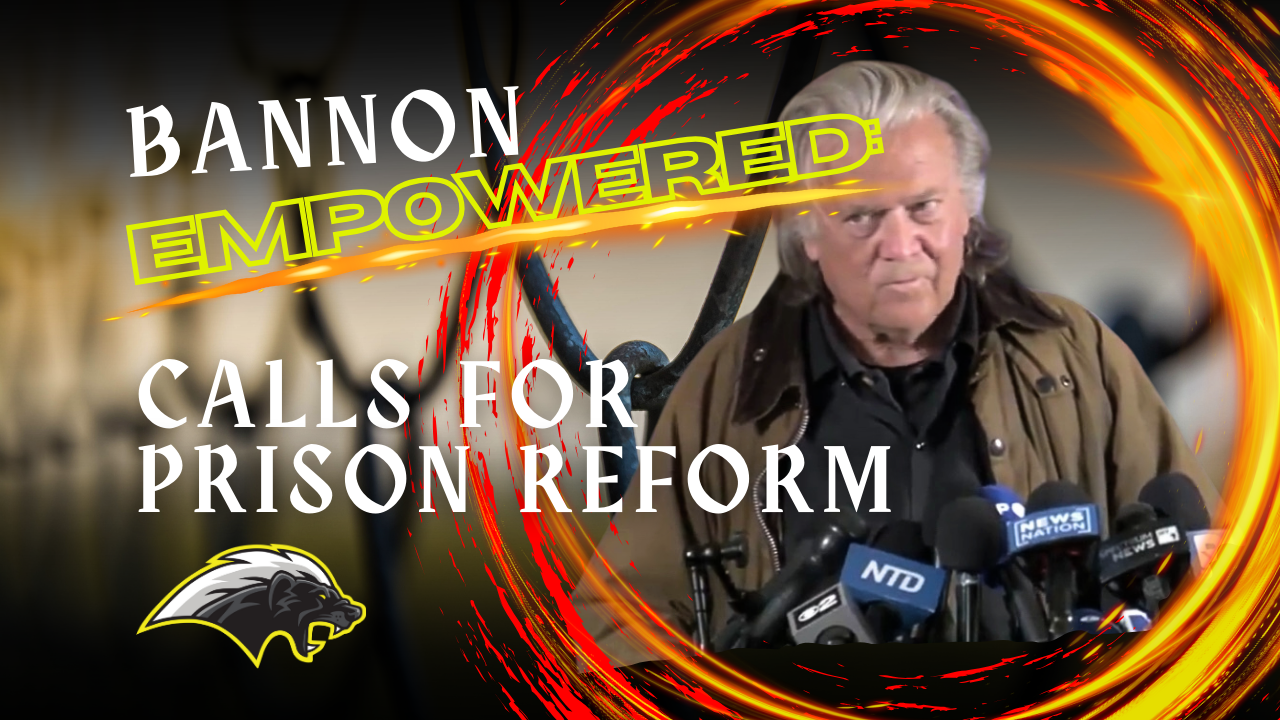
This morning, Steve Bannon, a former key strategist for President Donald J. Trump, was released from the Federal Correctional Institution in Danbury, Connecticut, after serving a four-month sentence for contempt of Congress. His release not only marks the end of a contentious legal episode but also allows Bannon to share his experiences and concerns, particularly regarding prison reform and the unfulfilled promises surrounding President Trump’s First Step Act.
The Contempt Conviction:
Bannon’s imprisonment stemmed from his refusal to comply with a subpoena issued by the House Select Committee investigating the January 6, 2021, Capitol attack. Despite his legal team arguing for executive privilege, the courts upheld his conviction. Bannon and his supporters have called this decision an example of politically motivated “lawfare.” As he stated upon his release, “I am finally out of being a political prisoner by the Merrick Garland, Kamala Harris, Nancy Pelosi regime.”
Steve Bannon’s back from federal prison, and he’s calling out Nancy Pelosi, saying her attempt to weaken his influence only made him stronger. According to Bannon, the War Room is more powerful than ever, ready to deliver a knockout blow to progressive agendas on November 5—and… pic.twitter.com/Y7F7AL8e1Y
— Lance Wallnau (@lancewallnau) October 29, 2024
Lawfare and Political Strategy:
Supporters of Bannon believe his legal troubles were part of a targeted attack to limit his influence. This view was reinforced when efforts to secure an early release under the First Step Act were denied by the Bureau of Prisons. Many see the decision to keep Bannon behind bars until his scheduled release as an attempt to sideline him during a critical election period. Bannon emphasized, “They thought they could shut down the war room and break me. Well, I am far from broken.”
Press Conference Revelations:
After his release, Bannon wasted no time addressing the political scene. At a press conference in New York City, he critiqued the current administration’s approach to prison reform, focusing on the First Step Act. He accused Vice President Kamala Harris of neglecting the needs of minority men in federal prisons and described her as the “queen of mass incarcerations.” He noted that while President Trump had initiated significant reforms, the Biden administration has failed to deliver on its promises to reduce incarceration rates. “This is criminal negligence at the highest levels,” he asserted, highlighting the struggles faced by minority communities within the prison system.
Steve Bannon’s back from being a political prisoner, and he’s got a fiery message—he’s seeing firsthand how young African American and Hispanic men in this country have zero tolerance for Kamala Harris. This isn’t about theory; it’s about what’s unfolding on the ground as we head… pic.twitter.com/sdfVYmOLMf
— Lance Wallnau (@lancewallnau) October 29, 2024
Life Behind Bars and Advocacy for Change:
While in prison, Bannon kept busy working in the library and teaching civics and government classes to inmates, primarily young African American and Hispanic men. He described this experience as empowering, saying, “I was able to listen, observe, and learn from working-class minorities.” He argued that the First Step Act remains unimplemented among minorities due to political reasons, claiming, “Kamala Harris and the administration understand that implementing this act would be a massive political win for President Trump.”
Looking Forward:
Bannon’s release is not just about gaining freedom; his supporters view it as a victory for free speech and political activism. His swift return to public discourse, where he critiques the current administration’s prison reform policies, shows his intention to continue impacting the political arena. He remarked, “The system is broken. The Bureau of Prisons is broken. The justice department has weaponized itself against a conservative grassroots movement.”
As Steve Bannon reenters the public eye, his focus on prison reform and criticism of the current administration’s inaction resonate with those advocating for systemic change in the justice system. His journey, marked by resilience and political engagement, sets the stage for a significant chapter in his ongoing influence in American politics, especially as discussions about prison reform and political rights continue to evolve. “We are on the cusp of a massive victory,” he concluded, hinting at the political landscape ahead.
Full press conference:
Prison empowered this patriot’s passion! pic.twitter.com/DCdR8sDhBS
— Sheri Horton (@sherihorton) October 29, 2024