
Contributor News
40% Pay Raises & Pork: Will Congress Finally Put America First?

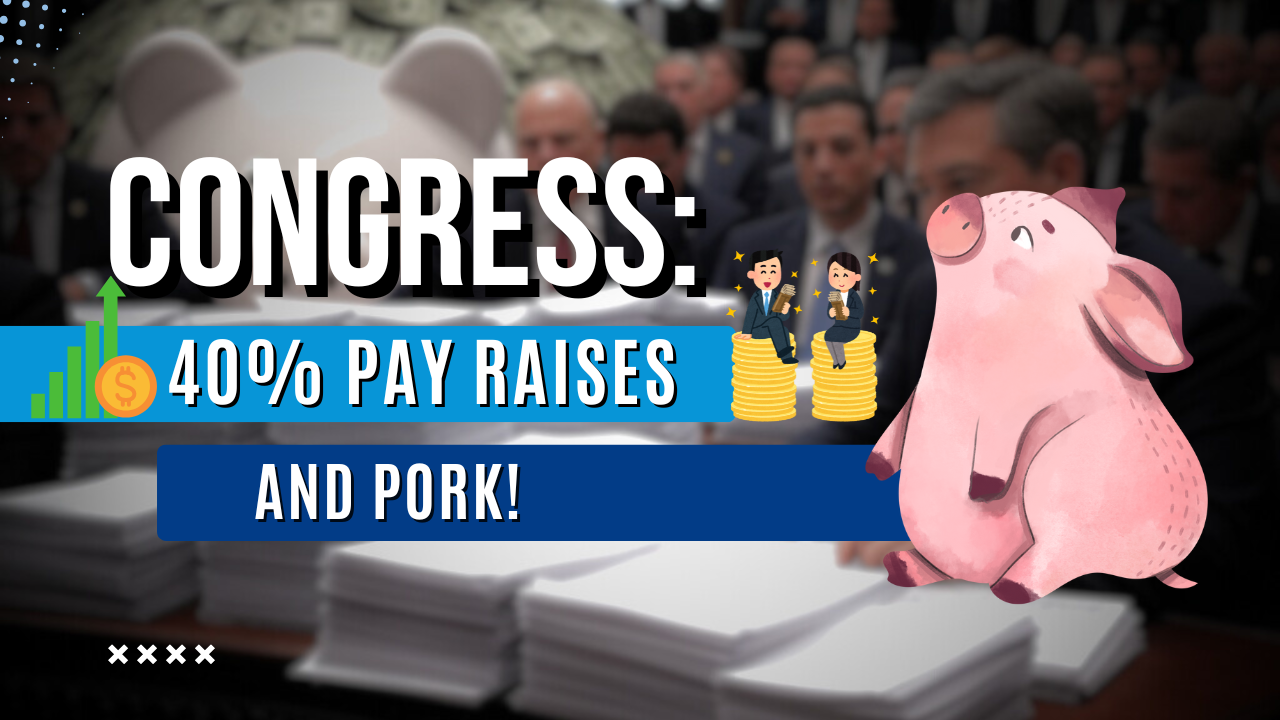
The legislative landscape in the United States has reached a turning point. Congress is currently debating yet another colossal-sized 1,547-page Continuing Resolution (CR). This bill, designed to keep the government funded through March 14, 2025, aims to prevent a government shutdown but has sparked controversy for reasons beyond its size. One of the most contentious elements that has come to light so far is a proposed 40% pay raise for members of Congress, boosting their annual salary from $174,000 to $243,300. This works out to about a $70,000 increase, an unheard-of amount, which many feel Congress is out of touch, especially considering the current economic crises many Americans face.
Calls for Legislative Simplicity
The sheer length of this CR has renewed demands for more straightforward, more focused legislation. Some lawmakers argue for bills to be capped at around 20 pages, claiming that this would enhance transparency, accountability, and public trust. Smaller, streamlined bills could be more thoroughly examined, ensuring they align with the needs and expectations of the American people. Advocates of this approach believe it’s necessary to prevent legislation from becoming cluttered with last-minute, unrelated provisions.
Musk’s Take on the Controversy
Elon Musk, now leading the Department of Government Efficiency (DOGE) under President-elect Donald Trump, has publicly lambasted the bill. His concern centers around what he sees as the epitome of government inefficiency and self-interest, especially with the bill’s failure to be voted on today. Musk used social media to call out the process, emphasizing the need for the government to focus on the needs of its citizens rather than on expanding its own benefits.
This is insane! This is NOT democracy!
How can your elected representatives be asked to pass a spending bill where they had no input and not even enough time to read it!!?? https://t.co/rrjekkZEUP
— Elon Musk (@elonmusk) December 18, 2024
The more I learn, the more obvious it becomes that this spending bill is a crime.
It even includes funding for the worst illegal censorship operation in the entire government (GEC)!! https://t.co/P8a3m0OpJR
— Elon Musk (@elonmusk) December 18, 2024
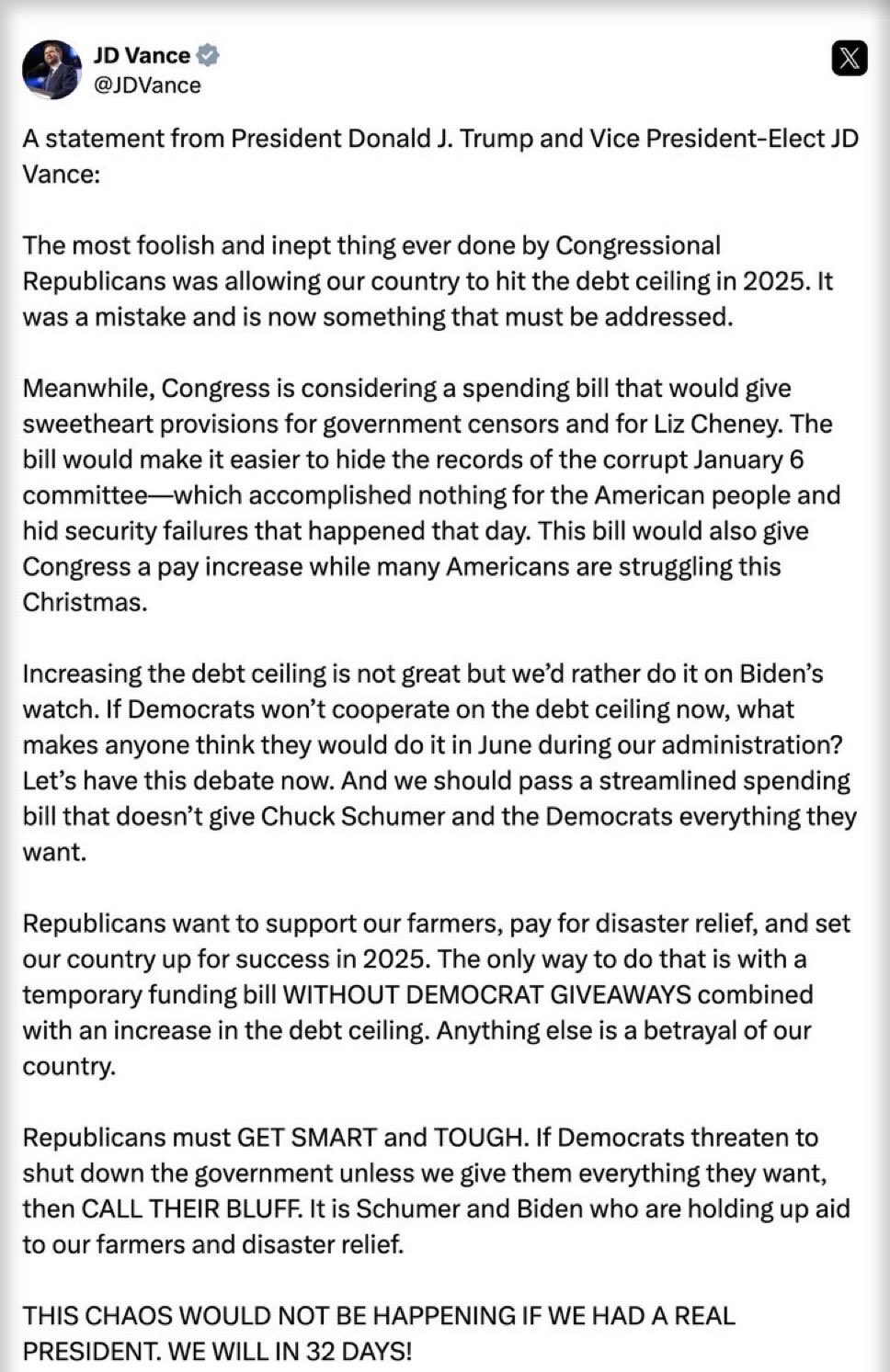
Joint Statement from Trump and Vance: In response to the delay and the bill’s contents, President-elect Donald Trump and Vice President-elect J.D. Vance issued a joint statement criticizing the CR. They highlighted the irony of increasing congressional salaries while many Americans struggle with recovery from natural disasters and rising costs of living. They’ve called for a more focused legislative approach that addresses domestic issues first, particularly in light of the unvoted bill.
Vivek Ramaswamy’s Perspective: Entrepreneur and political commentator Vivek Ramaswamy has also weighed in, decrying the legislative process that allows such a bill to be considered without sufficient scrutiny or debate. He has criticized the system for fostering a culture where large, complex bills are passed with minimal transparency, often to the detriment of the public interest.
Real-time advice to Congress: go back to the drawing board, start with a blank slate & do this the right way. There’s still time for forgiveness. https://t.co/O9P9wWXZ5E
— Vivek Ramaswamy (@VivekGRamaswamy) December 18, 2024
Domestic Challenges vs. International Commitments
This legislative debate unfolds against a backdrop of pressing domestic issues and significant international aid commitments. For instance, President Joe Biden recently approved an $8 billion security assistance package for Ukraine while parts of the United States continue to struggle with unresolved crises. In Western North Carolina, residents are still recovering from Hurricane Helene’s devastation. Despite Governor Roy Cooper’s urgent request for $25 billion in disaster recovery aid, the federal response has been criticized as inadequate. This stark contrast between swift international aid and delayed domestic support has fueled frustration across the nation.
A Question of Priorities
The disparity between international aid and domestic crisis management has drawn criticism from local leaders and lawmakers alike. In Western North Carolina, many residents remain in temporary housing or face ongoing economic hardships, underscoring a gap between federal priorities and the needs of everyday Americans. Public figures like Musk have rightfully amplified these concerns on social media, questioning why domestic issues are often overshadowed by foreign policy initiatives. The trending phrase “America First” has resurfaced in online discussions, emphasizing the need to prioritize national challenges.
Moving Forward
This debate over the CR is about more than just the size of legislative documents or the allocation of funds. It’s part of a larger conversation about governance, accountability, and prioritizing the needs of American citizens. Simplifying legislation and realigning funding priorities ensures Congress serves its constituents first. How lawmakers resolve this CR will speak volumes about their commitment to addressing the immediate concerns of Americans over bureaucratic or foreign interests. By addressing the key issues of transparency, disaster relief, and fiscal responsibility, Congress has an opportunity to restore trust and demonstrate authentic leadership.