
Contributor News
Historic Move: Trump Brokers Ceasefire and Hostage Release Ahead of Inauguration


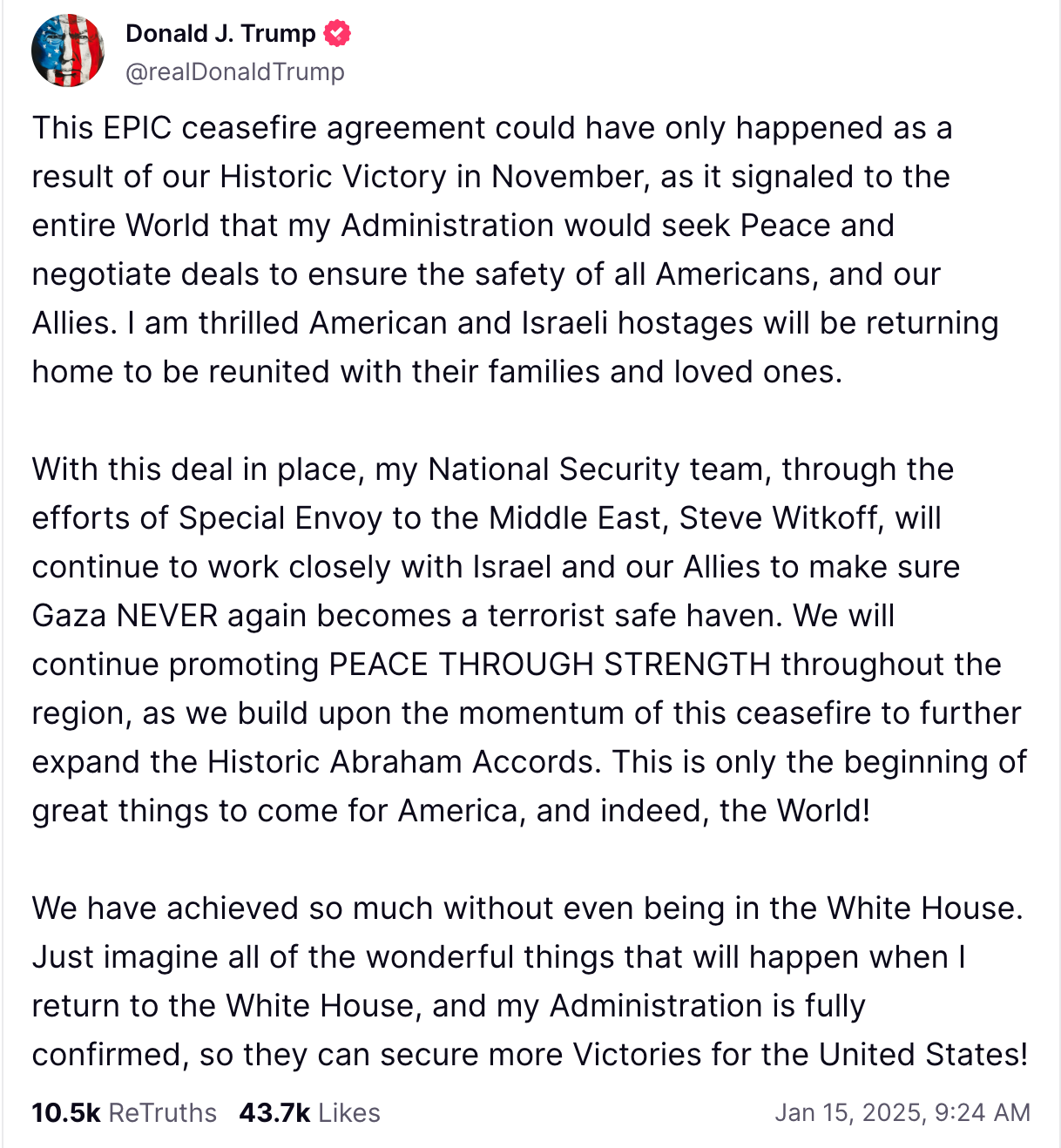
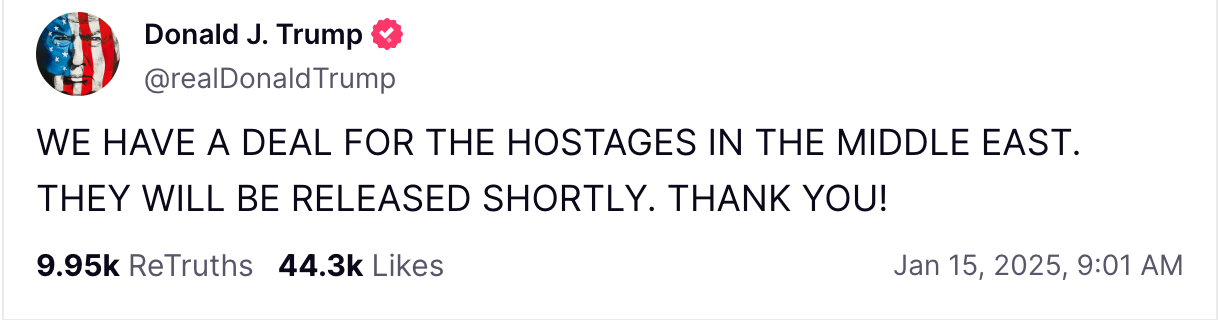
Just days before next week’s January 20, 2025, inauguration, President-elect Donald Trump announced a hugely significant breakthrough in the Middle East. In two declarations made just twenty-three minutes apart, he revealed the release of hostages held by Hamas in Gaza and the establishment of a ceasefire between Israel and Hamas. This powerful dual announcement marks the end to a year-long conflict and sets the stage for new regional diplomatic endeavors.
Hostage Release and Ceasefire Breakthrough
Trump’s announcements came via his social media platform, Truth Social, where he proudly declared the imminent “EPIC” release of hostages, a direct result of his administration’s pressure tactics. The ceasefire agreement, equally pivotal, aims to halt the ongoing violence that has plagued the region since the tragic Hamas attack on Israel on October 7, 2023. This attack led to over 1,200 deaths and the abduction of more than 250 individuals, thrusting the area into a sustained period of warfare.
The Path to Peace
The negotiations, mediated by the United States, Egypt, and Qatar, have been complex, with previous ceasefire proposals faltering over terms like prisoner exchanges and the cessation of military activities. Trump’s involvement, particularly his ultimatum that all hell would break loose without the release of hostages before his inauguration, has evidently been a game-changer. His announcement suggests that his influence was instrumental in reaching this agreement.
- Humanitarian Impact: The release of hostages is not just a political victory but a humanitarian triumph, offering hope to families torn apart by this crisis.
- Political Ramifications: For Israel, this may signal a need for strategic recalibration under Prime Minister Benjamin Netanyahu, who has faced domestic criticism over his handling of the conflict. For Hamas, agreeing to the ceasefire under international and regional pressure could serve to mitigate their already contentious position as a terrorist organization, designated by numerous countries, including the U.S., for their violent attacks on civilians—particularly Jewish individuals—and opposition to those challenging their radical ideologies.
Looking Forward: Expanding the Abraham Accords
Trump’s vision doesn’t stop at a ceasefire. He has expressed intentions to expand the Abraham Accords, a series of agreements from his first term aimed at normalizing relations between Israel and Arab nations. In time, this expansion could include more countries, fostering peace and economic cooperation in the Middle East.
What This Means for the Region
These developments occur at a critical juncture, just days before Trump’s return to office, highlighting his administration’s immediate focus on international diplomacy and conflict resolution. The ceasefire and the prospective expansion of the Abraham Accords could reshape geopolitical alliances, offering a new pathway to peace or, at least, a significant reduction in hostilities. However, the true test will be in the implementation and the long-term commitment to addressing the root causes of the conflict.
As we move closer to Trump’s inauguration, the world watches closely, hopeful that these announcements might not just be a temporary pause in violence but a step towards lasting peace in the Middle East.