
Contributor News
McCarthy Hits The Ground Running: Creation Of Investigative Panels Into FBI and More…

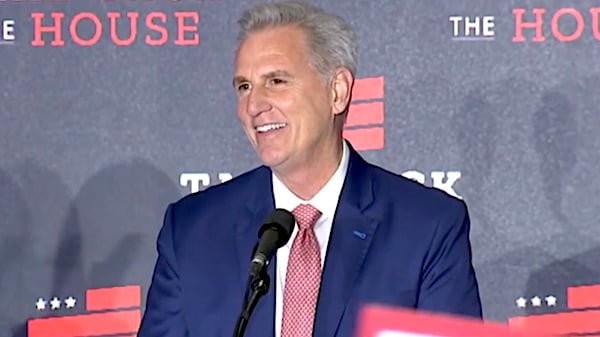
Since winning last Friday’s historical late-hour and 15th round of votes for Speaker of the House, Kevin McCarthy has been quite busy.
This week, the creation of panels to investigate the FBI, China, and more was announced.
According to the 20 (former) Republican holdouts, part of their demands included the creation of investigative panels.
McCarthy promised the panel investigating China would be severe and truly bipartisan, saying it was “not for somebody to go in and be viral to make some point.”
One investigative panel, officially named as the “Weaponization of the Federal Government,” will be conducted under the jurisdiction of the Judiciary Committee, led by Rep. Jim Jordan, R-Ohio. Jordan said the committee would be modeled after the bipartisan “Church Committee,” a 1970s congressional investigation that sought to investigate allegations that the U.S. government spied on its own citizens for decades. That investigation led to significant reforms with the passage of the Foreign Intelligence Surveillance Act (FISA), which requires intelligence agencies to seek permission from a secret court before surveilling Americans.
Just The News obtained a copy of the Republican’s 12-page House Rules, which proposed the creation of these panels.
According to the memo, a COVID panel will look at the government’s “funding of gain-of-function research, the use of taxpayer funds and relief programs to address the pandemic, the effectiveness of laws and regulations to address the Coronavirus pandemic and prepare for future pandemics, the development of vaccines and treatments and the implementation of vaccine mandates for federal employees and the military.”
The COVID subcommittee will also examine “the economic impact of the pandemic, including state and local government responses, the impact of school closures on American children, Executive Branch decisions and communications related to the pandemic, the protection of whistleblowers who provided information about improper activities, and inter-government cooperation regarding oversight of the preparedness for and response to the pandemic.”